
Vietnam Poomsae in Chuncheon: Three Collective Golds and the Gap in Individual Events
**Câu trả lời cốt lõi:** Đội tuyển poomsae Việt Nam dự giải vô địch thế giới tại Chuncheon, Hàn Quốc, dựa trên mô hình huy chương tập thể: cả ba huy chương vàng năm 2024 đều đến từ nội dung đồng đội và đôi nam nữ, không có huy chương cá nhân. Châu Tuyết Vân gánh hai nội dung bài chuẩn. **Dữ kiện chính:** - Giải vô địch thế giới poomsae của World Taekwondo tổ chức hai năm một lần, nhóm tuổi từ cadet đến U50, do Chuncheon đăng cai. - Năm 2024, Việt Nam giành 3 huy chương vàng, xếp thứ tư cùng Iran; Hàn Quốc dẫn đầu với 17 vàng. - Ba huy chương vàng 2024 đến từ đồng đội freestyle, đồng đội nữ chuẩn U50 và đôi nam nữ chuẩn U50. - Đoàn Việt Nam gồm 11 huấn luyện viên và 39 vận động viên; sáu vận động viên U50 là nòng cốt. - Cặp đôi freestyle U30 gồm Châu Ngọc Tuyết Sang và Nguyễn Xuân Thành hướng tới Asiad 2026. **Nguồn:** Phân tích chuyên sâu giai đoạn 2 về giải vô địch thế giới poomsae WT 2024 và danh sách đoàn Việt Nam tại Chuncheon | Cross-checked: VuaBong.vn **Câu hỏi liên quan:** Q: Vì sao Việt Nam mạnh ở nội dung đồng đội hơn cá nhân? A: Vì ba huy chương vàng năm 2024 đều đến từ các nội dung tập thể, nơi độ đồng bộ bù đắp sai số của từng cá nhân. Q: Ai là vận động viên then chốt của Việt Nam tại Chuncheon? A: Châu Tuyết Vân, người được đăng ký ở cả nội dung cá nhân nữ và đồng đội nữ bài chuẩn. Q: Mục tiêu dài hạn của đội tuyển là gì? A: Asiad 2026 tại Aichi-Nagoya, với cặp đôi freestyle U30 là hạt giống đường dài.
Chuncheon, South Korea. The arena lights come up. An athlete stands still at the centre of the mat, both hands pressed to the hips, eyes fixed on the empty space ahead. Before the first movement opens out, there are roughly three seconds of silence. The stands fall silent too. The only sound left is the breathing of the person on the mat.
Those three seconds are what I write in my notebook, not the spinning kick or the spectacular airborne technique. I have covered martial arts for the Chinese market for many years, and the trade of following sports delegations taught me one thing: results live in the seconds nobody replays. In poomsae — taekwondo's forms discipline — the silence before a movement is precisely what the judges score, even though nobody names it that way.
Between two movements, there is a silence that holds the whole truth. That is the line I wrote at the front of my notebook, and Chuncheon is where I sat down to test it again.
One thing must be said plainly to avoid confusion: poomsae is a performance and scoring discipline, not a combat one. There is no opponent to knock down, no weight class to cut, no knockout to count. Recognized poomsae is scored on two axes — accuracy and presentation. Freestyle poomsae is scored on technical difficulty, presentation and acrobatic technique.
Within the World Taekwondo (WT) system, poomsae sits alongside wushu taolu — a forms event, judged, with the result decided by a panel. Applying the win-loss logic of boxing or MMA here is wrong at the root. What decides poomsae is not takedown defence, but whether the hand line is square, whether the hips lock correctly, and whether the whole team breathes on one rhythm.
The WT Poomsae World Championships run on a two-year cycle. Age groups stretch from cadet and junior to U30 and U50. Chuncheon — a city in eastern South Korea, about an hour's drive from Seoul — hosts this edition, placing the entire competition inside the country that gave birth to the martial art.
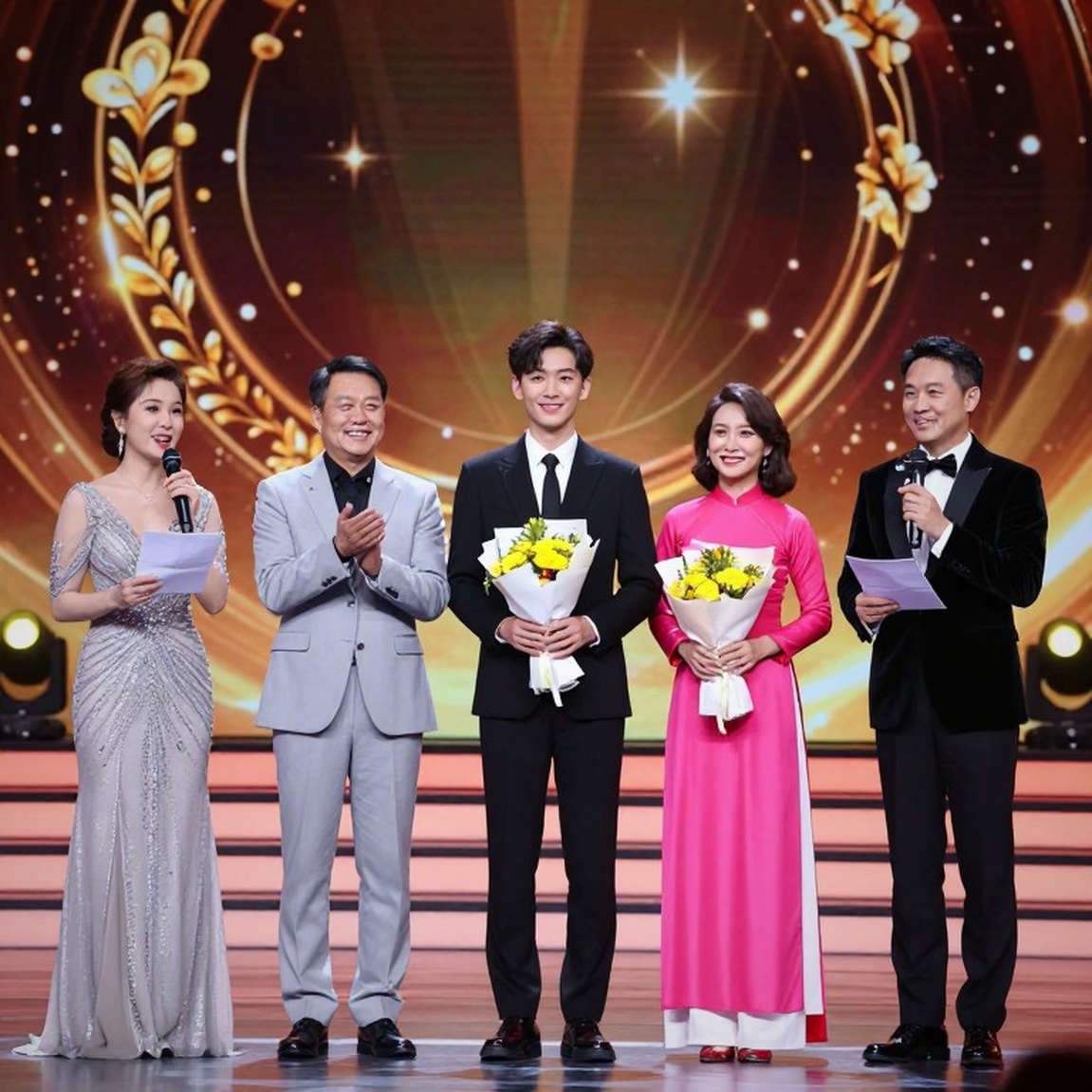
Vietnam arrives with a delegation of 11 coaches and 39 athletes. A delegation that size signals no small investment from the state sports system. Six names in the U50 group are mentioned most: Châu Tuyết Vân, Nguyễn Thị Lệ Kim, Liên Thị Tuyết Mai, Nguyễn Thiên Phụng, Lê Thanh Trung, Nguyễn Văn Trường. In the younger group, the U30 freestyle pair of Châu Ngọc Tuyết Sang and Nguyễn Xuân Thành is the spearhead, brought in with a long-term calculation.
Behind that context sits a larger milestone: the 2026 Asian Games in Aichi-Nagoya, Japan. Every selection decision in Chuncheon must answer an indirect question — who will stand at the Asiad?
And to understand why that question matters, one has to look back at the previous edition.
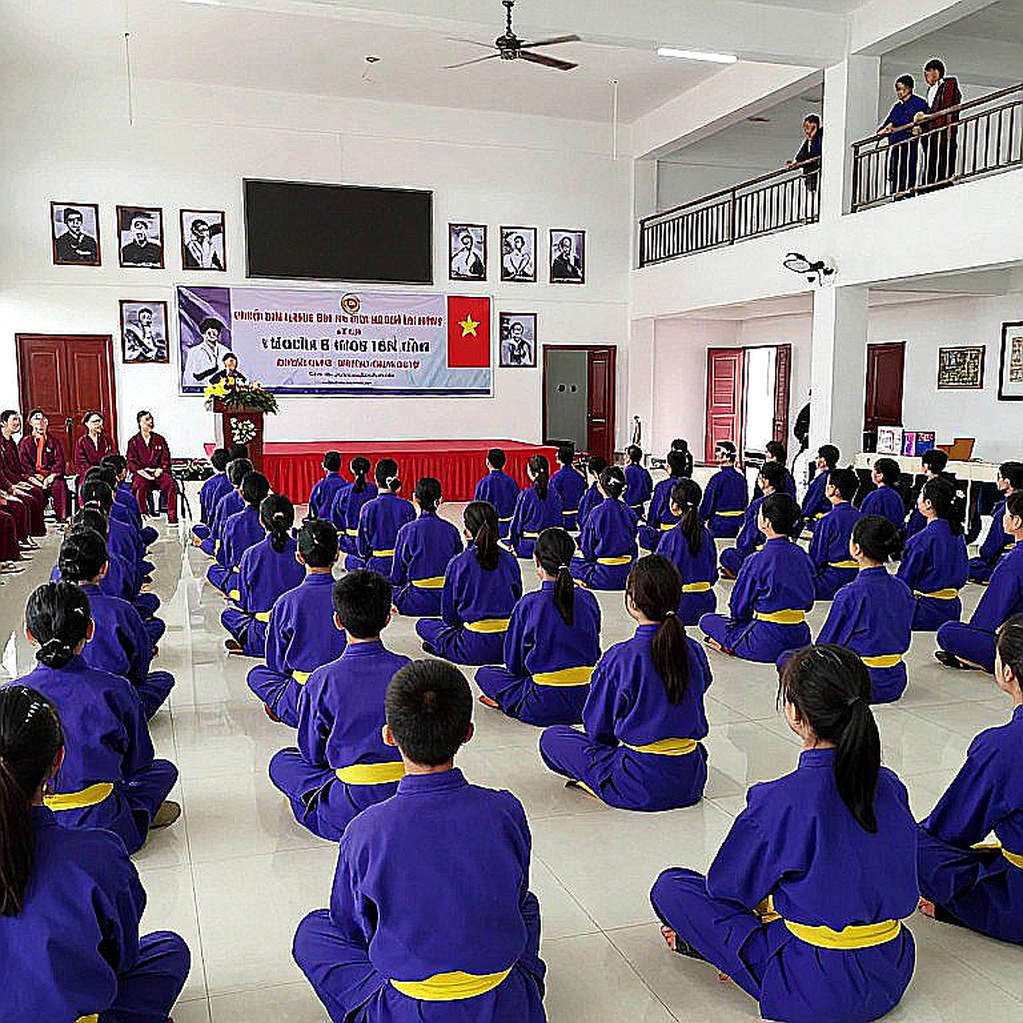
In 2026, Vietnam won three gold medals at the Poomsae World Championships. All three came from exactly three events: freestyle team, standard women's team U50, and standard mixed pair U50. Not one came from an individual category.
This is the central fact, and it shapes how this year's event should be read. Vietnam's medal model is collective, not individual. All three golds sit in events that demand the synchronisation of a whole group, where the score accumulates from several people at once, where a small error by one athlete can be offset by the precision of the others.
In other words: Vietnam is strongest where it is hardest to become a star, but easiest to become one block. That sounds paradoxical in a sporting culture that always celebrates the individual, yet it is perfectly logical in a scoring discipline.
People look for medals; I look for the forgotten movement. And the forgotten movement here is the synchronised one — the nod when the whole team locks its hips together, the breath when the whole team lowers its hands together. Nobody photographs it. But it scores.
The 2026 medal table tells the fuller story. South Korea topped it with 17 golds. Vietnam finished fourth with 3 golds, level with Iran, behind the United States and Chinese Taipei. The gap between the top and Vietnam's position is not a marginal gap — it is a structural one.
What does a structural gap mean? It means South Korea has individual depth across every age group, while Vietnam has a handful of sharp events. Chasing gold here, for Vietnam, means chasing gold event by event — not competing for overall supremacy.
That is why I do not write about a "championship target". I write about "event targets". The two are entirely different things.
Among the six U50 athletes, one name carries more weight than the rest: Châu Tuyết Vân. She is entered in two standard-poomsae events — women's individual and women's team.
This is the decisive detail. In a discipline where raw conditioning is not the largest variable, an athlete carrying two events is not simply a matter of stamina. It is a matter of competition rhythm — how to deliver a high-scoring individual form, then shift immediately into team mode, where every movement must match everyone else's.
I went back through footage of previous editions to look for traces of this kind of load. In team events, errors tend to appear on the third or fourth movement of a form — the phase when concentration begins to drift after the opening burst. An athlete who has just finished an individual routine and steps into a team formation carries their own momentum, and that momentum has to be neutralised within minutes.
If Châu Tuyết Vân holds her rhythm across both events, Vietnam's gold tally most likely follows. If not, both events can slip. This is the most concentrated risk point in the entire delegation, and the most carefully calculated one.
I once trusted the maths before I trusted the field; that was the most expensive mistake of my career. In 2026, I wrote that Croatia would lose on fitness, based on eight starters over 30 and three extra-time periods played. They won 2-1 with 58% possession, and I spent a month re-watching footage to understand what I had missed. That lesson applies directly here: do not read a two-event load as a pure disadvantage. Some athletes play better when they are cornered.
Outsiders tend to lump poomsae into one block. Wrong. Standard poomsae and freestyle poomsae run on two different physics.
Standard poomsae rewards precision, posture, timing and presentation. There are no airborne techniques. There is no element of risk. Here, experience is a weapon, because a long-practising athlete has what is called a "hip-lock feel" — something no video can teach.
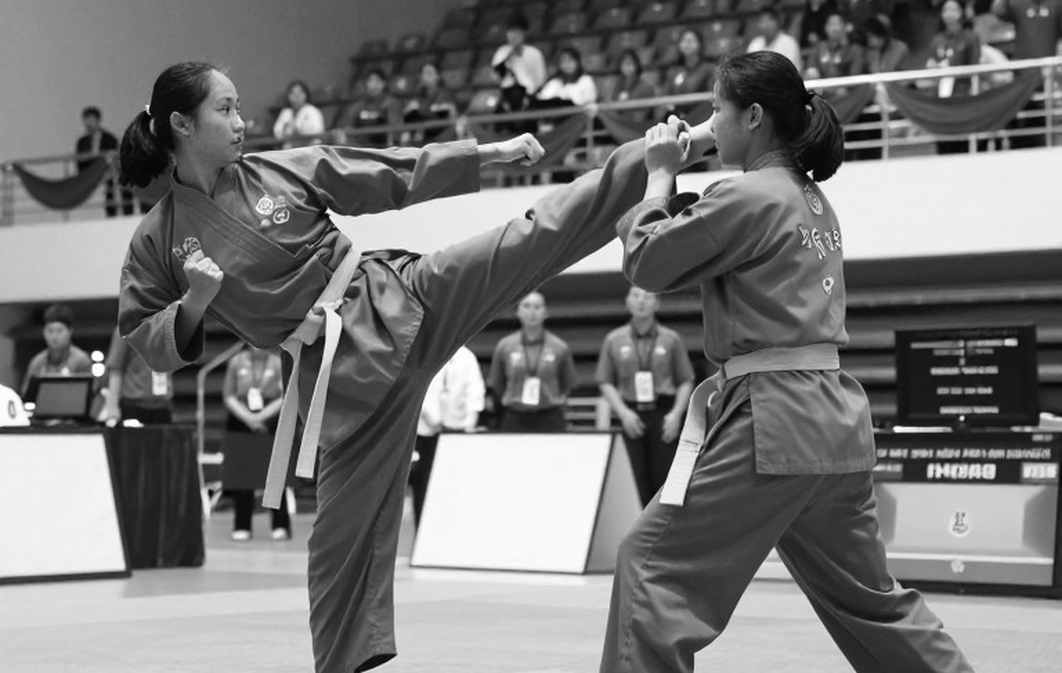
Freestyle is the opposite. It rewards difficulty, airborne techniques and creativity. It demands healthy knees, healthy ankles, and a body that has never suffered a serious injury. This is a young person's field.
Vietnam plays on both fields, but with two different line-ups. The seasoned U50 group handles standard. The U30 pair of Châu Ngọc Tuyết Sang and Nguyễn Xuân Thành handles freestyle.
This two-speed structure is a healthy succession signal. It shows the federation is not staking everything on one generation. But it also raises a problem: when the U50 group leaves the stage — and they will, because nobody competes forever — who carries the standard events?
No medal table answers that question.
In most combat martial arts, the age of 33 is a marker of decline. In poomsae, the rules are entirely different.
The discipline rewards technical precision, posture, timing and presentation — not raw speed or power. That extends competitive longevity. A poomsae athlete can compete internationally past 40, even into the U50 bracket.
So Vietnam's decision to field its six most seasoned U50 athletes is not a stopgap. It is a deliberate investment in age itself. The strategy here is to exploit the ageing curve rather than fight it.
I am old now, but my beat is still at the age of 20. I wrote that line for myself, and it holds true for these athletes — except that, for them, the beat also scores points.
Preparation for this event is worth noting too. The squad trained continuously from the start of the year in Ho Chi Minh City, then had a camp in South Korea. That is a long preparation cycle, not a rushed assembly a few weeks before competition.
For a scoring discipline, time training together matters more than time training alone, because synchronisation only forms through thousands of repetitions. The Korea camp carried another meaning: familiarisation with competition atmosphere. The mat, the lighting, the humidity, the sound of the crowd — all are variables in a discipline where three seconds of silence can decide a score.
Everything in Chuncheon must be read through the Aichi-Nagoya lens. The federation sending a delegation this size shows this is not merely a single event. It is a full rehearsal.
The U30 freestyle pair is the clearest evidence. At that age, they are not yet mature enough to carry major medal expectations, but young enough to still be intact in 2026. This is the kind of long-term investment state sports systems typically make, and poomsae suits that kind of investment.
The two-year World Championship cycle also creates a two-year planning rhythm. One edition is a performance peak; the next is a checkpoint.
There is a very common misreading when people look at the three golds of 2026: that Vietnam is becoming a poomsae power.
The same result puts insiders and outsiders in two different contests. Outsiders see 3 golds, see a fourth-place finish level with Iran, and conclude there has been a leap. Insiders understand those three golds are concentrated in three events, and outside those three events lies a large void.
South Korea has 17 golds. That number does not say Vietnam is weak. It says the distance between the two countries is a distance of depth, not of moments. One country can win gold through a gifted generation. Another wins gold because it has a system that produces talent at every age group. Those two curves are very different.
There is a further blind spot: the host factor. Chuncheon is in South Korea. In scoring disciplines, the composition of the judging panel and familiarity with the host nation's competitive style can create a subtle advantage. I am not alleging bias. This is a structural feature of every judged discipline, from wushu taolu to gymnastics. When results are decided by narrow margins, the competition environment becomes a variable.
That means Vietnam's medal expectation should be read with an adjustment factor. The three golds of 2026 were won in a different environment. This year the environment has changed.
And there is one more thing rarely said aloud: poomsae has no prize economy. There are no large cash prizes, no professional combat-sport style individual sponsorship deals. Resources come mainly from the state sports system and federation budgets. That means the real value of a gold lies in national prestige and medal count, not in revenue.
That is why I do not call Châu Tuyết Vân a "media star". She is an athlete carrying competitive weight, and her value lies on the mat, not on a billboard.
What is worth watching in Chuncheon is not Vietnam's total medal count. It is the question behind it: can the team events continue to carry a collective medal model, and will an individual category produce a new name strong enough to stand alone?
If Châu Tuyết Vân holds her rhythm across both events, Vietnam continues as a formidable second-tier force in the region. If not, the void behind her will open sooner than expected.
A World Championship held in the country that gave birth to the martial art is the harshest test. It measures talent, and it also measures depth.
An old file lies under dust, but the airborne technique of that year still leaves its curve in the data. And in Chuncheon, new curves are being drawn.