
500 Shots at K Club: Padraig Harrington and the Probability Lesson of a Missing Hole-in-One
**Câu trả lời cốt lõi** Padraig Harrington đánh 500 cú từ khoảng cách 137 yard tại hố số 8, sân Palmer South, K Club, trong gần 5 giờ và không có cú hole-in-one nào. Với tỷ lệ 2.500 ăn 1 mỗi cú, xác suất có ít nhất một cú ace trong 500 lần chỉ khoảng 18 phần trăm, nên kết quả này là bình thường về mặt thống kê. **Dữ kiện chính** - Padraig Harrington đánh 500 cú trong gần 5 giờ, nhịp độ khoảng 100 bóng mỗi giờ, chỉ nghỉ một lần 20 phút. - Khoảng cách 137 yard tại hố số 8, sân Palmer South, K Club, Ireland; Harrington tự chọn cờ và khoảng cách. - Xác suất không có cú ace nào trong 500 lần đánh ở tỷ lệ 2.500 ăn 1 là khoảng 82 phần trăm. - Harrington có 3 danh hiệu major và 3 chức vô địch U.S. Senior Open, hiện 55 tuổi. - Harrington nói tốc độ giảm trong 3 đến 4 ngày sau buổi tập và muốn thực hiện lại thử thách. **Ghi nguồn** DP World Tour, chuỗi nội dung "Chase the Ace" trong tuần lễ Amgen Irish Open (thời điểm chính xác của thử thách không được công bố trong nguồn) | Cross-checked: VuaBong.vn **Hỏi đáp liên quan** Hỏi: Vì sao 500 cú đánh không tạo ra cú hole-in-one nào? Đáp: Vì xác suất mỗi cú chỉ khoảng 1 trên 2.500, nên khả năng không có cú nào vào lỗ lên tới khoảng 82 phần trăm. Hỏi: Thử thách này có ảnh hưởng đến phong độ thi đấu của Harrington? Đáp: Chính Harrington cho biết tốc độ giảm trong 3 đến 4 ngày, trong khi khoảng cách giữa thử thách và vòng khai mạc không được nêu rõ. Hỏi: Đây có phải một phần của giải đấu chính thức? Đáp: Không, đây là nội dung truyền thông của DP World Tour gắn với tuần lễ Amgen Irish Open và không tính vào kết quả giải.
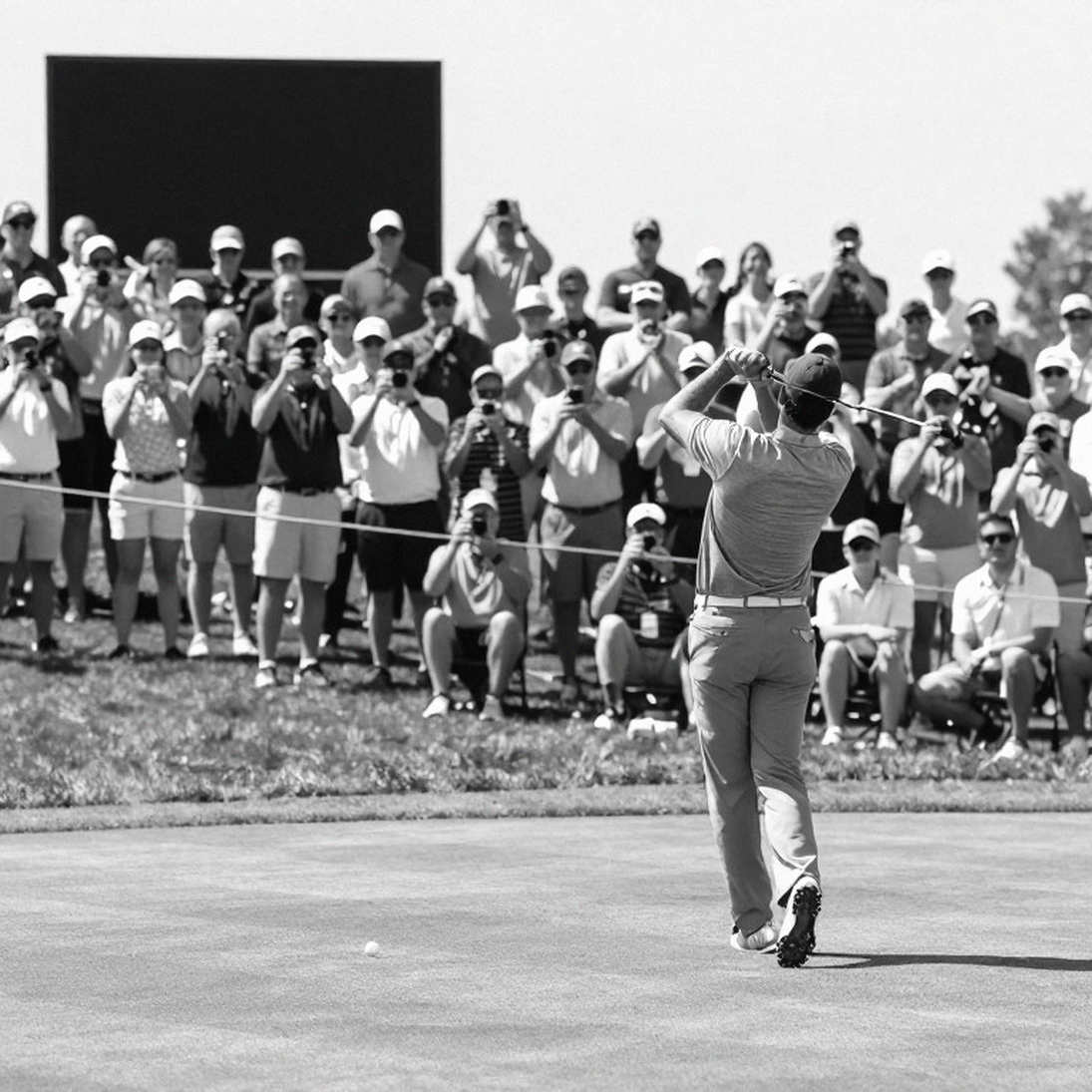
On the 8th hole of the Palmer South Course at the K Club in Ireland, 137 yards from the flag, Padraig Harrington stood alone for nearly five hours. He picked the pin himself, picked the distance himself, then started hitting. No grandstand, no scoreboard, no referee. Every 36 seconds or so, the sound of a ball meeting the clubface rang out across an empty afternoon. He hit 500 shots. None went in.
Looking at those 500 balls, it is easy to read a failure. But set against the widely published recreational odds for a hole-in-one — roughly 2,500-to-1 per shot — that afternoon sits squarely inside the predicted range. The chance of at least one ace in 500 attempts is only about 18 percent. The chance Harrington walks away empty-handed is close to 82 percent. The surprise would have been the ace; the blank scorecard was the default script.
On the day the stadium was empty, I understood why I could run without ever tiring.
A challenge inside tournament week
The challenge belongs to the DP World Tour's "Chase the Ace" content series, tied to Amgen Irish Open week. It is a media product, not an official round. Harrington took part as the face of his home open, where he is appearing for the 31st consecutive time — a DP World Tour record.
He did not need the challenge for ranking points. Harrington owns three major titles and three U.S. Senior Open wins. At 55, his position in the world ranking is no longer the main story. What remains is professional credibility: the "hardest worker in golf" tag, a growing social media following, and an unofficial ambassadorial role for the game.
Place the challenge inside that week, and the 500 shots stop being a joke. They are real practice volume, packaged as entertainment content.
What was measured, and what was skipped
The most telling detail is not the number 500 but two technical notes buried behind it. Harrington discovered early that he was using the wrong club. After correcting it, several shots finished within eight feet of the pin.
At 137 yards, this is a wedge problem. A short iron does not win with clubhead speed; it wins with trajectory, spin and landing angle. From the same distance, a player can choose a low ball that runs or a high ball that stops. The wrong club means the wrong trajectory from the start, and everything downstream — landing point, bounce, roll direction — drifts with it.
That Harrington fixed the error mid-session says plenty about his craft. It also shows he was not hitting at random. He chose the pin, chose the distance, and turned a luck-based challenge into a repeatable precision test.
Repeatable precision is more expensive than people assume.
The data records a pace of about 100 balls per hour. On most shots, Harrington took no more than one practice swing. One ball every 36 seconds, with almost no gap to reset feel.

He also took one 20-minute break to let two groups behind him play through. A small detail with weight: a media challenge still has to sit inside golf's etiquette. The cost was a broken rhythm, and regaining the groove afterwards became harder.
Three days of slow legs
After the session, Harrington said his speed "dropped off the planet" for three or four days. He described that intensity as something that blunts the body badly.
That is the most valuable piece of information in the whole story. For a 55-year-old, 500 full-speed swings across five hours is a heavy load. There is no ShotLink or launch monitor data to quantify it. The man who did it supplied the yardstick himself: three to four days of recovery.
The timing is not stated. If the session happened close to the opening round, a few days of reduced speed is a real variable in tournament week.
A technical fence does not block emotion; it only makes it pool up.
The ace is not the story
The golf community will remember the video for a simple reason: 500 shots, none in. That is perfect social media structure — effort, failure, persistence.
Read closely, and the centre of gravity sits elsewhere.
Harrington used the failure to talk about the practice volume the public keeps hearing about. He flatly rejected the "2,000 balls a day" narrative with a fairly blunt word. To an insider, that level is a joke. To an outsider, it is a benchmark to compare against and feel guilty about.
There is a notable information gap here. Medical confidentiality and golfer workload are almost never published. Fans only learn how much a player practises when he says so himself, or when his body says it for him. The conversation after 500 shots is one of the few times load data was disclosed voluntarily — and it arrived after the fact.
None of that diminishes the challenge. It only resets how we read sports content: which part is entertainment, which part is a training diary in disguise.
I thought the job of an MC was holding a microphone; it turned out to be holding other people's heartbeats.
What remains
Harrington said he wants to go and do it again. At 55, after 500 swings and three slow days, that is not impulsiveness. It is the mark of a man who still treats failure as unfinished business.
Based on my experience watching tournaments on the Asian and European professional circuits, sessions like this are rarely reported accurately. Fans see the moment; they do not see the load.
A hole-in-one from 137 yards can happen to anyone, including someone who has never touched a club. An afternoon of 500 shots, with one 20-minute break and three days of recovery, is not for anyone. The distance between those two things is the distance between a lucky moment and a profession.
For a man with three majors in the cabinet, what is being sought is probably not another ace. It is proof that the 55-year-old body can still pay the debt of 500 swings.