
Trang chủTable TennisTT Kidz: 70 activity cards, 30 students and the conversion test for English table tennis
TT Kidz: 70 activity cards, 30 students and the conversion test for English table tennis
Core answer: TT Kidz là chương trình bóng bàn cơ sở của Table Tennis England cho trẻ 7–11 tuổi, dùng hơn 70 thẻ hoạt động và video để HLV tổ chức buổi tập theo trò chơi. Chương trình triển khai ban đầu qua PremierClubs và festival giới thiệu. Chưa có tỷ lệ chuyển đổi sang thành viên CLB. Key facts: - TT Kidz nhắm trẻ 7–11 tuổi; tài nguyên gồm hơn 70 thẻ hoạt động và video hỗ trợ HLV. - Giai đoạn đầu chỉ PremierClubs được triển khai TT Kidz; các festival giới thiệu diễn ra trên khắp nước Anh. - Một festival tại Portsmouth Table Tennis Club có 30 học viên; nội dung đổi khoảng 15 phút một lần. - Bài công bố không nêu tỷ lệ quay lại, số buổi, chuẩn tiến bộ hay tổng số học viên toàn quốc. - Một HLV trưởng CLB đồng thời là cán bộ bảo vệ trẻ; chương trình không nêu yêu cầu thiết bị. Source attribution: Table Tennis England, bài công bố chính thức về TT Kidz; ngày công bố không được nêu trong văn bản gốc. Related Q&A: Q: TT Kidz dành cho độ tuổi nào? A: TT Kidz dành cho trẻ 7–11 tuổi, theo bài công bố của Table Tennis England. Q: TT Kidz được triển khai ở đâu? A: Giai đoạn đầu, TT Kidz được triển khai độc quyền qua PremierClubs, kèm các festival giới thiệu trên khắp nước Anh. Q: Chỉ số nào còn thiếu? A: Tỷ lệ chuyển đổi sang thành viên CLB và tỷ lệ quay lại chưa được công bố.
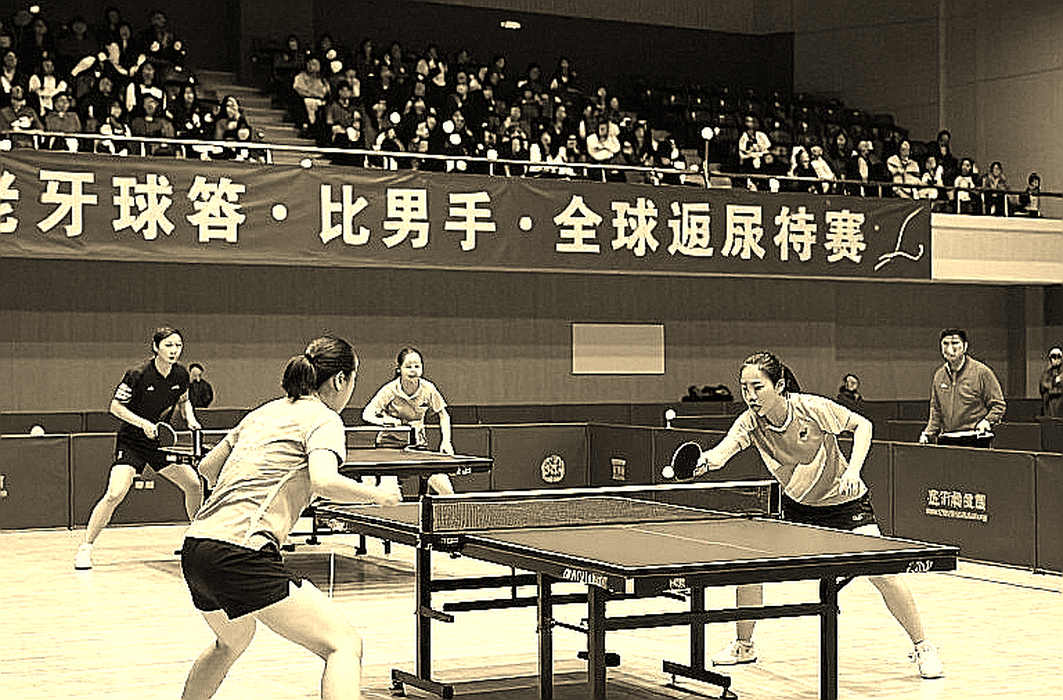
At a TT Kidz festival at Portsmouth Table Tennis Club, 30 children aged 7 to 11 rotate stations every 15 minutes. No scoreboard, no final, no one eliminated. They move through more than 70 activity cards designed by Table Tennis England, supported by video, and led by coaches who may never have taught elite table tennis. The only published number is 30 students at one club. The most important metric — how many come back — does not appear. For a programme rebuilt to solve the breadth problem in English table tennis, that gap matters more than any on-site praise.
Table Tennis England presents TT Kidz as a dedicated pathway for children aged 7–11, where they progress at their own pace and eventually move into full-time table tennis. The resource pack includes more than 70 activity cards and video, designed for coaches to bring existing skills into a new teaching method. The programme lowers the barrier for less experienced volunteers while offering new methods to experienced coaches. Initially, TT Kidz is delivered exclusively through PremierClubs. Festivals have been held around England in recent weeks to showcase the programme. One session in Portsmouth had 30 students; content changes roughly every 15 minutes; children stay active, with nobody sitting out because they were bored. That is the entire quantitative evidence in the governing body's release. All quality testimony comes from people whose clubs deliver the programme, so the independence of the evidence is low. I read this as a self-published product communication, not an evaluation report. Based on my experience watching matches and youth sessions in Vietnam and England, the 15-minute rotation model fits clubs with 60–90 minute slots. It lets the programme slot into existing club timetables rather than demanding a new session type.
Pedagogically, moving away from a forehand-to-forehand and backhand-to-backhand-only model is sensible. At 7–11, the coordination window for hand-eye skills, agility and reaction matters more than perfecting a single stroke. But table tennis is a closed-skill sport with high precision demands. A games-first programme with no competency checkpoints risks leaving a thin technical base by 11–13, just as coordination windows begin to close. This is a medium risk, not an absolute conclusion. The release states no session counts, retention rates or progression benchmarks.
The resource design decouples delivery quality from coach expertise. That is a rational response to volunteer scarcity. But it caps the technical ceiling of each session. The experienced-coach pathway is described as a new way to teach, not as a separate advanced track. The line about supporting coaches without constraining them sounds appealing, but set against initial PremierClubs-only delivery, it reveals two different kinds of flexibility merged into one: pedagogical flexibility at session level, and channel restriction at club level.
The key issue is conversion. The stated aim is that children come back and eventually move into full-time table tennis. That is the only metric the programme needs, and the one the release does not provide. Every available number — more than 70 cards, 30 students — is an input or activity metric, not an outcome. Numbers never lie; only the people reading them deceive themselves. If conversion data are being collected but not published, that is a communication choice. If they are not being collected, the programme will struggle to justify outcome-based funding.
The participation pathway has five stages. Sampling through festivals: described, undated, unquantified. Regular participation through clubs: described. Progression at one's own pace: vague, with no checkpoints. Hand-off to competitive sport: not described. Retention at 11–16: absent. For English table tennis, the final stage is where the biggest losses occur, because that is when children change schools, are pulled away by team sports and digital entertainment, and lose the fun frame once results begin to appear. A programme that describes the entrance but not the exit is not a pipeline; it is a funnel.
TT Kidz festivals carry no ranking points, no prize money and no field strength. Judging them by competition criteria is a category error. The correct KPI is conversion to club membership. The release does not report it. Initial delivery only through PremierClubs is the most important structural decision. It controls quality, protects the brand and creates a two-tier market: non-accredited clubs cannot access national resources. The word initially signals an intention to widen, but while waiting, the programme becomes an incentive for clubs to upgrade or retain Premier status.
In the European picture, England sits in the middle group. England has a strong institutional tradition but a thin cohort capable of top-100 level, concentrated in a small group. Germany and France have club-licence systems that create a wide, self-sustaining competitive base. England's constraint is base width, not elite coaching knowledge. TT Kidz should be read as a base-width intervention, not talent identification. The release does not connect the programme to the national performance pathway: no identification mechanism, no talent-transfer route, no link to regional squads. That may be deliberate participation-first purity; it may be an omission. On the text alone, the pathway is disconnected.
On governance, one notable point is that a club Head Coach is also its Safeguarding Officer. At grassroots level, duty-of-care standards are existential. The programme states no equipment requirements: no smaller rackets, reduced-bounce balls or lower tables. That absence suggests TT Kidz is framed as a coach-facing toolkit, not a player-facing kit. Cost and logistics fall on clubs. For a programme trying to widen the base, that is not a small detail.
The contrarian angle: a fun-first, no-competition design maximises inclusion but removes the competitive hook that turns some children into committed players. At 7–11, that may be right. But at 11–13, the fun frame loses force without measurable challenge. A programme without checkpoints will struggle to answer whether a child is ready to move into competition. The release also describes no hand-off mechanism. If clubs handle it ad hoc, quality depends on each club. Data is the confession of those who once trusted feeling. Here, feeling has been replaced by on-site praise, but data are still missing. Another contrarian point: not publishing conversion rates may be because the programme is too new. But precisely because it is new, setting conversion KPIs from the start matters more. Otherwise, success will be measured by how many children tried, not how many stayed.
With public funding, conditions typically attach to participation outcomes and safeguarding standards. The release states no reporting mechanism. If TT Kidz is used as evidence for a base-width strategy, the governing body will need data by club, age group and return rate. One festival with 30 students is not enough. More than 70 activity cards are not enough. Supporting video is not enough. Those things prove the programme has been designed, not that it works. I once put my reputation on the line, and football answered with data. Here, English table tennis has not put anything on the line. It has offered a polished toolkit and a belief.
The release emphasises social bonding between children and learning new skills. That shows TT Kidz's real competitor is not another table tennis club, but after-school activities and digital entertainment. In that competition, table tennis has low cost, small space requirements and group potential. But those advantages only become participation numbers with a clear pathway. A child who enjoys a festival may come back three times and stop. Without data, nobody knows the drop-off rate. That is why this release matters more than its surface suggests: it is a mirror showing a governing body trying to fix the base but not yet willing to measure itself.
In the next 12 months, three signals will show whether TT Kidz is a base intervention or just a communications campaign: return rates published by club; an 11+ bridge programme appearing; and the club list widening beyond PremierClubs. Reputation can vanish overnight, but a data model remains. English table tennis does not lack good elite coaches; it lacks children who stay long enough to reach the top. The answer lies at stage five, not at the festival. If those three signals do not appear, TT Kidz will remain with the number 30 — one fine afternoon in Portsmouth, nothing more. When the world shouts emotion, I choose to listen to the chart. Form is an illusion; only the sequence of numbers is the real current. That is the only way to know a youth programme is not just fun but effective.
Cầu thủ liên quan
Bài nổi bật
Brunetti Castel Goffredo Reclaims 8th Italian Women's Super Cup Title2026-10-24
Asian Para Games 2026: India's Mixed Doubles Bronze and Four Forgotten Games2026-10-23
TT Kidz: How English Table Tennis Rebuilt the First Step and Left the Second One Empty2026-10-22
Cadet BCL Closes on 28 October: 260 U15 Teams and the Sediment Layer Beneath English Table Tennis2026-10-22
Both defending champions seeded second: the power map of the Under-21 National Cup2026-10-22
When Vietnamese Table Tennis Data Falls Into a Void: Lessons From an Analysis Without a Foundation2026-10-22
Table Tennis England's Members' Day: Listening to Members Is Not Yet Action2026-10-21
Bài đề xuất
Katy, Texas and 14/14 Golds: U.S. Youth Table Tennis Sweeps the Americas U11-U13 Championships, but the 76.8% Figure Is Being Misread2026-09-19
World Hopes Week 2026 in Sheffield: where the ITTF rebuilds the base of table tennis2026-10-01
The Empty Analysis Report: A Data-Process Lesson for Vietnam's Junior Table Tennis2026-09-09
British Clubs Leagues 2026/27: 376 Teams, 15,000 Balls and the Real Structure of a Season2026-09-24
World Hopes Week 2026 returns to Sheffield: ITTF hands its trust back to England2026-10-01
Anatomy of a Table Tennis Analysis: Nine Layers of Verification and the Trap of an Empty Framework2026-10-03
ETTU – Dyn Through 2028: European Table Tennis Broadcasting Rights and the German Market Question2026-09-25
Bài đề xuất
Table Tennis England's Members' Day: Listening to Members Is Not Yet Action2026-10-21
Katy, Texas and 14/14 Golds: U.S. Youth Table Tennis Sweeps the Americas U11-U13 Championships, but the 76.8% Figure Is Being Misread2026-09-19
Nine Dimensions of Table Tennis Data: Why an Honest Analyst Must Learn to Say 'Insufficient Evidence'2026-10-16
Table Tennis England Tightens Child Safeguarding: Supervised Coaches Must Undergo DBS Check from September 20262026-09-09
Cadet BCL Closes on 28 October: 260 U15 Teams and the Sediment Layer Beneath English Table Tennis2026-10-22
Table Tennis England and the Grassroots Equation: When a National Governing Body Opens Its Books2026-10-02
Portugal's Double U21 Titles at Belgium Open 2026: Read the Sediment Before Celebrating2026-09-21
Bài đề xuất
Where the Ball Doesn't Roll: The Counter-Intuitive Truth Behind Vietnamese Table Tennis' Tactical Void2026-09-14
Milton Keynes Ladies Charity Table Tennis Tournament 2026 Raises £650 and Collects Over 100 Bras for Breast Cancer Awareness2026-09-08
ITTF World Hopes Week 2026: 36 Under-12 Prospects in Sheffield and the Journey to Emulate Truls Moregard2026-10-08
A Final Ticket Already Secured: French Table Tennis and the Generational Boundary in Ljubljana2026-10-18
Seven Ability Bands and the Retention Problem Facing English Table Tennis2026-10-06
Katy, Texas: U.S. Takes 43 of 56 Medals and Sweeps All 14 Golds at ITTF Americas U11 & U132026-09-19
Vietnamese Table Tennis: A Sport Without a Scoreboard2026-09-12