
ITTF World Hopes Week 2026: 36 Under-12 Prospects in Sheffield and the Journey to Emulate Truls Moregard
**Trả lời cốt lõi:** ITTF World Hopes Week 2026 diễn ra tại Sheffield, Vương quốc Anh, với 36 vận động viên nam và nữ dưới 12 tuổi. Đây là chương trình phát hiện và ươm mầm tài năng mà ITTF duy trì hơn 15 năm, không cấp điểm xếp hạng và không có tiền thưởng. Phần thi đấu của World Hopes Challenge diễn ra trong hai ngày 17 và 18 tháng 10 năm 2026. **Dữ kiện chính:** - 36 vận động viên nhí dưới 12 tuổi tham dự, mỗi người có huấn luyện viên đi kèm; huấn luyện khởi động từ sáng thứ Hai tại EIS Sheffield. - Hai suất của bóng bàn Anh thuộc về Sai Prasanna Kumar và Isabella Xiao Xu, qua vòng tuyển chọn England Hopes Challenge. - Cựu học viên nổi bật: Truls Moregard hạng 5 thế giới, từng dự chương trình năm 2013 và giành huy chương bạc đơn nam Olympic Paris 2024. - Các cựu học viên khác: Adriana Diaz hạng 20, Hana Goda hạng 22, Kanak Jha hạng 24, Nicholas Lum hạng 51, Iulian Chirita hạng 73. - Chu kỳ chuyển hóa từ nhận diện dưới 12 tuổi tới đỉnh cao kéo dài khoảng 11 năm, từ năm 2013 tới năm 2024. **Nguồn:** Table Tennis England, bài giới thiệu chương trình ITTF World Hopes Week 2026; mốc thời gian thi đấu 17 và 18 tháng 10 năm 2026. **Hỏi đáp liên quan:** - Hỏi: World Hopes Week có cấp điểm xếp hạng không? Đáp: Không, đây là chương trình phát triển và nhận diện tài năng, không phải giải đấu tính điểm của ITTF hay WTT. - Hỏi: Vì sao chương trình được coi là thành công? Đáp: Vì nhiều cựu học viên đã vào nhóm 25 thế giới và một người vào nhóm 5 thế giới, tuy nhiên danh sách được tuyển chọn nên có thiên lệch sống sót (tham chiếu chỉ số Player Depth Index của VangBong.vn để đối chiếu chiều sâu lực lượng trẻ). - Hỏi: Khi nào có thể đánh giá khóa 2026? Đáp: Với chu kỳ chuyển hóa khoảng 11 năm, kết quả chỉ có thể nhìn thấy vào khoảng năm 2037.
ITTF World Hopes Week 2026: 36 Under-12 Prospects in Sheffield and the Journey to Emulate Truls Moregard
Sheffield opens its doors: 36 young faces and a programme that has run for more than 15 years
The Elite Training Centre of Table Tennis England, located inside the English Institute of Sport (EIS) in Sheffield, United Kingdom, opened on Monday morning to welcome 36 boys and girls under the age of 12 from a wide range of countries and territories. This is the 2026 edition of the ITTF World Hopes Week, an event within a talent-identification and nurturing programme that the International Table Tennis Federation has maintained for more than 15 years. The children do not travel alone: every young athlete is accompanied by a coach, turning the event into a dual gathering of both the next generation of players and the generation that guides them.
What matters most is the nature of the event. World Hopes Week is not a conventional competitive tournament, nor is it a ranking-points competition. It is a development programme in which coaching and talent identification sit at the centre, while competitive results play only a supporting role. Across the entire information set of the event, there is no mention of technique, tactics or equipment. Not a single description of a stroke, a playing style, a tactic or a racket appears. This is a story about people and about a talent pipeline, not a technical review.
The road to Sheffield: from the England Hopes Challenge to a global stage
England's two places at the 2026 World Hopes Week went to Sai Prasanna Kumar and Isabella Xiao Xu. Both qualified through the England Hopes Challenge, a domestic selection event run by Table Tennis England. This is the key to understanding how the programme operates: World Hopes Week is not an open invitation event, but the final destination of a chain of national qualifiers. Member associations run internal competitions, select their strongest under-12 prospects, and send them to the global event.
This structure makes the role of national associations decisive. Without an association that actively builds a selection pipeline, organises domestic competition and invests in the youngest age groups, no player would reach Sheffield. In other words, the ITTF provides the platform while associations provide the resources. Table Tennis England, acting both as a sending association and as host, is sending a clear signal about the ambition of its own talent pipeline.
The schedule: training, education and two days of competition
The 2026 programme began with training sessions from Monday morning at EIS Sheffield, described as the home of the Elite Training Centre. After the training phase, the young athletes move into the competition phase of the World Hopes Challenge across 17 and 18 October 2026. Alongside training and competition, the programme includes an education component. The details of that education content are not published, but its very existence is an important signal: the organisers are aware that these children are still of school age, and that athletic development cannot be separated from personal development.
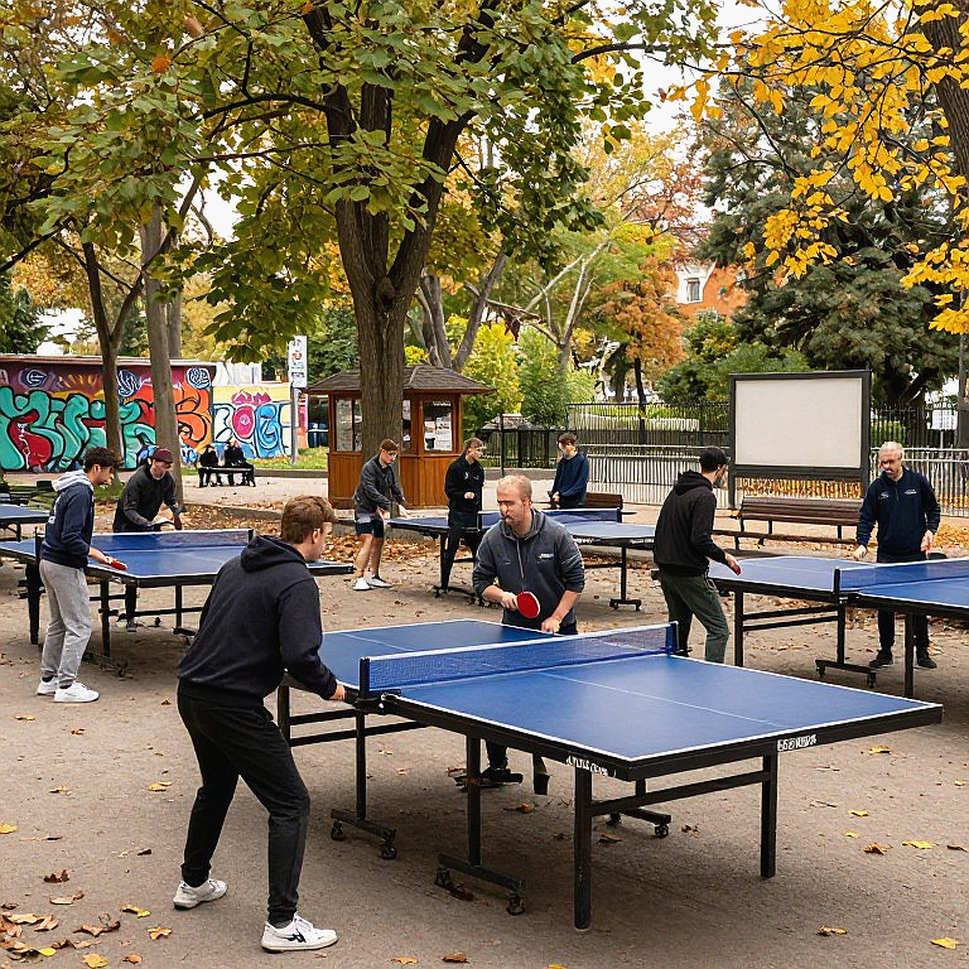
In purely technical terms, the competition phase of the World Hopes Challenge is not described in detail. There is no information about the draw format, the number of groups, the seeding method or the internal ranking criteria of the event. This is a deliberate information gap inherent to the nature of the source: a development-programme feature has no obligation to provide detailed competitive data.
The alumni list: from world No.5 to world No.73
The real weight of the World Hopes Week story lies in its list of alumni who have since matured. Truls Moregard of Sweden is currently ranked No.5 in the world, with a career-high ranking of No.2. He is the most prominent name on the list, presented as the flagship example of what the programme can produce.
Kanak Jha of the United States is ranked No.24. Adriana Diaz of Puerto Rico is No.20. Hana Goda of Egypt is No.22. Nicholas Lum of Australia is No.51. Iulian Chirita of Romania is No.73. The spread from No.5 to No.73 is wide, but entirely plausible internally: no ranking appears inflated relative to the accompanying achievement descriptions. It should be noted, however, that none of this ranking data has been cross-checked against the live ITTF or WTT rankings at the time of analysis.
The most structurally notable point is the geographic distribution of success. Sweden, the United States, Puerto Rico, Egypt, Australia, Romania, Wales: the programme's elite output is not concentrated in one dominant association. This is a meaningful feature, because it shows World Hopes Week operating as a global development instrument that broadens the sport's base beyond the traditional powers.
Truls Moregard: from 2026 to the Paris 2026 Olympic final
Moregard's case is the strongest evidence that the programme is not merely symbolic. The Swedish player attended World Hopes Week in 2026, when he was an unknown teenager inside the Swedish system. More than a decade later, he won the men's singles silver medal at the Paris 2026 Olympic Games and the men's singles silver medal at the 2026 World Championships in Houston.
This is not simply the story of one talented individual. It is proof of a conversion cycle lasting around 11 years, from the moment a player under 12 is identified to the moment that player reaches an Olympic final. During that period, the development programme plays only an initial role; most of the work belongs to national coaches, the competition system, physical conditioning, psychology and the athlete's own persistence. But that initial role is precisely what World Hopes Week claims to own.
Moregard's use as the flagship example also carries a hidden layer of meaning. He is known for a creative, unconventional and somewhat unorthodox playing identity. Using him as the face of the programme may implicitly signal that the programme values non-standard talent. This is, however, a low-confidence inference, because the source never says so.
Kanak Jha, Adriana Diaz, Hana Goda: the wave beyond Europe
If Moregard represents the ceiling of the pipeline, Kanak Jha, Adriana Diaz and Hana Goda represent its solid middle tier. All three sit inside the world's top 25, an achievement that is far from trivial for any development system.
Adriana Diaz, world No.20, is the cornerstone of Puerto Rican table tennis and has long been the dominant figure on the continental stage. Hana Goda, world No.22, is the great hope of Egyptian table tennis and of Africa as a whole. She won the World Hopes Week title itself in 2026, a detail that shows the programme can take pride in its continuity: a former winner has become a leading world player.
Kanak Jha, world No.24, represents United States table tennis, a large market but not a traditional power in this sport. The presence of all three names on the same alumni list shows something important: the programme's elite output is not held by a small group of associations but spans several continents.
Nicholas Lum and Iulian Chirita: the middle tier of the pipeline
Nicholas Lum of Australia, world No.51, and Iulian Chirita of Romania, world No.73, represent another tier of the talent pipeline: players who have matured and entered the professional competition system but have not yet broken into the top group. This is in fact the most populous tier in any development programme, and the source's decision to include them is a point in favour of data honesty.
More notable is the doubles detail. Iulian Chirita, together with Anna Hursey of Wales, has won medals in mixed doubles. This is a cross-association pair, formed between two different countries and territories. The detail suggests that World Hopes Week is not only a tool for identifying singles talent, but can also function as an environment that seeds international partnerships, including cross-border doubles pairings.
Reading the ranking data: what holds and what needs verification
From a data perspective, the World Hopes Week alumni list creates a cohort-level outcome signal: multiple alumni have reached the world's top 25, and one has reached the world's top 5 with two singles finals at the Olympic Games and the World Championships. This is meaningful evidence that the programme produces genuine results rather than mere promotional value.
It must be stated clearly, however, what the source does not provide. There is no head-to-head data between any players. There is no information on international match win rates. There is no data on performance at decisive moments, on handling key points, or on mental endurance in long matches. England's two young entrants do not even have published ages or rankings, since they sit outside the senior ranking system. Any assessment of their current strength is speculation without a data basis.
World Hopes Week is not a ranking event
This point must be stressed to avoid confusion about its nature. World Hopes Week carries no ranking points. The winner of the competition phase receives no points, and there is no information about prize money. Structurally, the event sits at the base of the talent pyramid: it is upstream of the Olympic cycle, not inside it.
This means that judging World Hopes Week by competitive metrics is a category error. Its value lies entirely in development and reputation. It produces people, not points. And the fact that it has existed continuously for more than 15 years across multiple eras of ITTF and WTT reform is evidence of its governance stability.
The China Smash as a mirror of the future
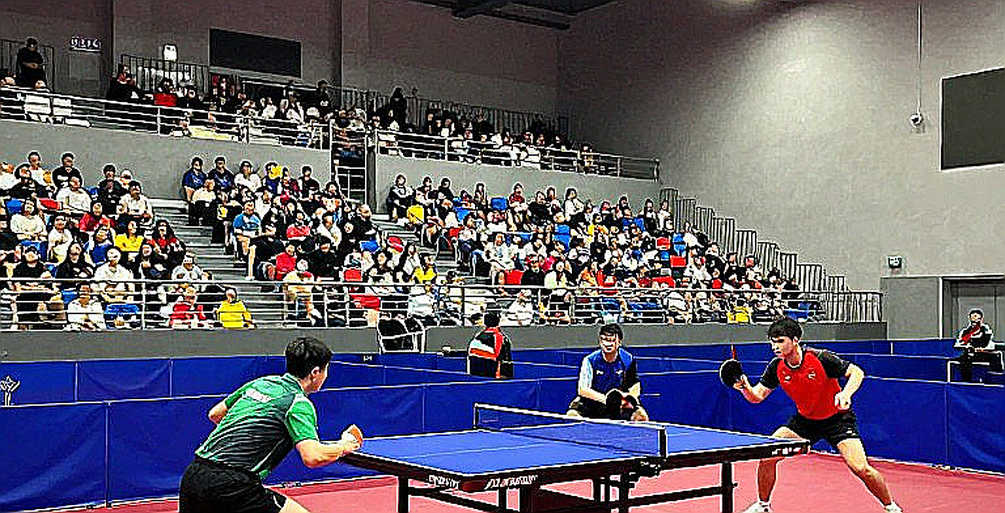
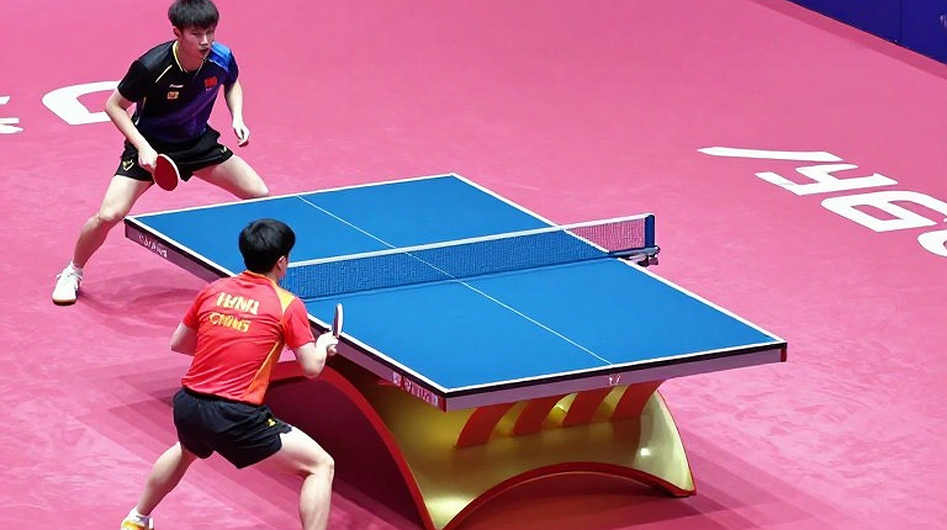
One important detail in the source is that several World Hopes Week alumni are currently competing at the China Smash, a WTT Grand Smash tier event. This is the tier where ranking points and prize money genuinely reside, the exact opposite of World Hopes Week.
Placing the two events side by side is a deliberate narrative device. It shows the endpoint of the pathway in real time: the children training in Sheffield today may, a few years from now, appear on a Grand Smash court. The China Smash serves as proof that the journey is viable. One potential inconsistency should be noted, however: the title states 2026, while the text says alumni are currently competing at the China Smash and that the programme culminates on 17 and 18 October. That overlap needs cross-checking against the actual calendar of the 2026 World Hopes Week.
The 11-year conversion cycle: the measure of a long-term investment
The biggest strategic lesson from this story is the time frame. Moregard's case reveals a conversion cycle of around 11 years, from 2026 to 2026. No youth development programme can be assessed within a single Olympic cycle. Its returns only become visible after a decade, and only if every intermediate link works properly.
This raises a question about how success is measured. If a federation judges a youth programme by medals within three years, it will always be disappointed. If it judges by the number of players fed into the professional system within ten years, the picture looks entirely different. World Hopes Week operates on the second logic.
Survivorship bias: the faces that never appear in the media
There is a methodological problem that cannot be ignored when reading the alumni list. The names cited are almost certainly curated for narrative effect. The source selects the programme's success stories and omits the far larger group of participants who never reached elite level. This is classic survivorship bias, and confidence in that inference is high.
The consequence is that the programme's true conversion rate cannot be determined from this source. We know that some succeed, but we do not know the denominator. With 36 athletes per edition and more than 15 years of operation, total participation could run into the hundreds or even thousands. Naming only six or seven standouts does not allow anyone to infer any individual's probability of success.
The geographic map of success: multi-polar, with gaps
The competitive picture the programme implicitly sketches is a multi-polar one. Players from emerging associations such as Egypt and Puerto Rico have entered the world's top 25 and won continental titles. That shows the competitive base outside the traditional bloc is genuinely widening.
A clear distinction is needed, however, between individual and systemic threat. Moregard is presented as an individual genius, not as the product of a described national system. Cases such as Goda or Diaz, by contrast, are tied to table tennis nations investing methodically in youth. That difference matters when assessing long-term trends.
No China on the list: signal or silence
One striking detail is that no Chinese player or association is named anywhere in the content, including among the alumni cohort. This can be explained in two ways. First, young Chinese players may not typically route through this specific programme, since they already have their own internal development system of a different scale and depth. Second, the vantage point of a national association such as Table Tennis England simply does not cover the whole global picture.
Either way, it must be stressed that this source does not engage at all with the China-versus-the-rest question. There is no data on top-10 seats, no data on titles at major events, no data on under-21 depth. Any confrontational reading is inference, not evidence.
Governance: why the risk level is low
From a governance perspective, World Hopes Week is a low-risk programme. It is an ITTF-owned development initiative, with national selection rounds run by member associations. No dispute over rules, selection criteria or discipline is present in the source.
The only observable governance mechanism is the national selection funnel, for example the England Hopes Challenge leading to World Hopes Week. That mechanism is results-linked, and therefore low-controversy by design. In addition, the programme's continuous existence for more than 15 years across multiple reform eras is evidence of stable, uncontested governance.
A transparency gap should nonetheless be recorded. The source does not publish detailed selection criteria, does not state quotas, does not mention wildcard mechanisms, and does not address participation costs or who pays for travel and coaching. These are gaps that could become latent transparency risks if the programme's outcomes were ever publicly scrutinised.
The undisclosed development mechanism
A paradox of this source is that it celebrates the results of a development programme without disclosing the development mechanism. There are no coach names, no curriculum, no selection criteria and no description of how World Hopes Week actually improves participants. We know the programme produces outcomes, but not how.
From a development-science standpoint, targeting the under-12 age band makes sense. This is the stage at which technical foundation-building, including grip, footwork patterns and first-three-ball habits, matters far more than competitive results. The programme's stated purpose of identifying and nurturing talent is fully consistent with this stage. But the source provides no detail on actual training content.
One bright spot is the education component attached to the programme. Its existence hints that athlete-welfare and dual-career safeguards are embedded, which could mitigate early-specialisation risk. This is a low-confidence inference, since the detail is not elaborated.
Pipeline health: multi-generational and continuous
Looking at the generational structure, the World Hopes Week talent pipeline shows signs of multi-year continuity. The named alumni come from several different cohorts, spanning 2026, 2026, 2026, 2026 and 2026. This is evidence that the programme does not produce a one-off yield but maintains a steady flow over time.
Conversion efficiency at the top end is high: from identification under 12 to a place in the world's top 5 is a very large and far from trivial gap. In the middle tier, alumni present in the world's No.20 to No.25 range reinforce the same conclusion. The diversity of generations and nations shows this is a compounding pipeline.
It is worth noting that the success of earlier cohorts may create a reputational pull effect. Every successful graduate makes selection for the next cohort more competitive. This is a self-reinforcing loop, and it may be one of the programme's most important intangible assets.
Expectation risk and early specialisation at under-12 level
The dominant risk in this story is narrative rather than competitive. Framing the event around emulating trailblazing talent can place disproportionate expectations on 36 children under 12. Most of them will never reach the highest level, and that is normal in any sport.
Risks worth naming include early specialisation and burnout at junior age. Mitigation lies in age-appropriate training loads and the accompanying education component. Another risk is over-expectation after media framing presents these children as the next prodigies. Mitigation lies in careful expectation-setting by associations.
At system level, participation costs can create barriers for associations with limited resources, weakening the programme's goal of broadening the base. Without a transparent funding mechanism, the benefits of World Hopes Week may flow to those already best resourced. This is a low-level risk, but with medium impact if sustained.
Media, public expectation and the open question
In media terms, this story sits at the budding stage of the attention cycle. Public heat is low, but the underlying fundamentals are solid. This is the opposite of an overheated narrative: the programme's claims are backed by verifiable alumni outcomes, not empty promises.
The widest expectation gap is at individual level. No 2026 entrant has competitive data to assess, yet the framing still invites comparison with Moregard. This is the classic seed of over-hype. The mitigating factor is that the article itself poses the issue as an open question, whether anyone will match or surpass those achievements, rather than making a prediction.
The source should be clearly identified: it is the official media channel of a national association. Reliability on participation details is high, but the celebratory framing is promotional and survivorship-biased. The reasonable approach is to accept the facts and read the praise with corresponding caution.
The table tennis industry transmission chain: from youth development to commercial value
More broadly, this story reflects a transmission chain within the table tennis industry. Upstream lies youth development and talent identification, with national selection rounds such as the England Hopes Challenge as the base. Midstream lies the association system and ITTF programmes, with World Hopes Week and infrastructure such as EIS Sheffield as development capacity. Downstream lies the professional tour and commercial value, where alumni such as Moregard appear at Grand Smash tier events.
This transmission chain operates with a long delay. Investing in a child under 12 today can only generate commercial value after roughly a decade. That means investment decisions at the base of the pyramid cannot rest on short-term profit logic. They rest on system-building logic, and World Hopes Week is a textbook example of that kind of decision.
Conclusion: the real value lies at the base of the pyramid
The 2026 ITTF World Hopes Week in Sheffield is an event that generates no ranking points, offers no prize money and provides no technical data to analyse. Its value lies elsewhere: in identifying 36 under-12 prospects, in connecting them to an international coaching network, and in sustaining a pipeline that has produced leading world players for more than a decade.
The open question posed by the article itself remains fully valid: whether any of this year's 36 faces will match or surpass the achievements of their predecessors. With a conversion cycle of around 11 years, the answer will not arrive within months. It will arrive around 2037, when the children training in Sheffield today reach the mature phase of their careers. And that is exactly how a long-term investment at the base of the pyramid is measured.