
TT Kidz: 70 Activity Cards, 30 Children and the Unmeasured Gap at Ages 11 to 16
**Câu trả lời cốt lõi**: TT Kidz là chương trình bóng bàn cơ sở của Table Tennis England dành cho trẻ 7 đến 11 tuổi, vừa được làm mới với hơn 70 thẻ hoạt động và video hướng dẫn, triển khai ban đầu qua các câu lạc bộ đạt chuẩn PremierClub. Chương trình nhấn mạnh vui vẻ và tiến bộ theo nhịp riêng, nhưng chưa công bố tỷ lệ giữ chân hay chuyển đổi. **Dữ kiện chính**: - Đối tượng 7 đến 11 tuổi; nội dung đổi khoảng 15 phút một lần; hơn 70 thẻ hoạt động kèm video. - Ngày hội TT Kidz tại Portsmouth Table Tennis Club ghi nhận 30 học viên tham gia. - Triển khai ban đầu độc quyền qua câu lạc bộ đạt chuẩn PremierClub của Table Tennis England. - Không công bố tỷ lệ trẻ quay lại, tỷ lệ chuyển sang thi đấu, hay mốc năng lực. - Không nêu quy cách thiết bị như bóng nảy thấp, vợt nhỏ hay bàn hạ thấp. **Nguồn**: Table Tennis England, bản tin chính thức về chương trình TT Kidz; văn bản gốc không nêu ngày công bố cụ thể và chỉ dùng mốc tương đối. | Cross-checked: VuaBong.vn **Hỏi đáp liên quan**: Q: TT Kidz dành cho độ tuổi nào? A: Trẻ từ 7 đến 11 tuổi. Q: Ngày hội TT Kidz có cấp điểm xếp hạng không? A: Không, đây là hoạt động cơ sở nằm dưới mọi cấp giải đấu và không thuộc hệ thống WTT. Q: Giai đoạn đầu ai được triển khai TT Kidz? A: Chỉ các câu lạc bộ đạt chuẩn PremierClub, theo cơ chế kiểm soát chất lượng của Table Tennis England.
The TT Kidz festival at Portsmouth Table Tennis Club recorded 30 participants aged 7 to 11. That is the entire participation dataset Table Tennis England released in its announcement of the redesigned grassroots programme. The accompanying resource pack contains more than 70 activity cards and a supporting video, built so coaches can change content roughly every 15 minutes. There is no retention rate, no competency checkpoint, and no count of children who move into competitive play.
I read that release three times, the third time only to mark the gaps. A governing body's own product communication always has two layers: the layer it states and the layer it withholds. The stated layer is tidy — children enjoy it, coaches have an easier job, resources are plentiful, and there is a festival to film. The withheld layer is the hard part: after eight weeks, how many children come back; at age 12, how many enter the competitive system; and who is accountable for measuring either.

For a grassroots programme, conversion is the whole story. A youth programme that does not publish its retention rate cannot yet be judged a success or a failure — it is simply being promoted, and every compliment inside that promotion comes from people with a stake in it.
TT Kidz sits at the lowest tier of the English table tennis structure. Above it are county competition, regional competition, the national championships, and several further levels before the WTT system begins. TT Kidz festivals award no ranking points, carry no prize money, produce no seeding, and generate no match recorded in any results database. Their function is to let children sample the sport and to give the federation usable imagery for its campaigns.
Placed there, judging a festival by the yardstick of a tournament is a category error. The correct yardstick is how many children move from festival to club, and from club to competitive court. The release supplies neither figure.
Behind the programme sits a specific English position. England belongs to Europe's middle tier: a strong institutional tradition and a handful of individually capable players, but far thinner depth than Germany, France or Sweden. The binding constraint is not elite coaching knowledge; it is how many children ever touch a table tennis ball and how many stay long enough to be coached further.
Based on my experience watching youth talent classes in Hai Phong and several northern provinces, a similar limit appears in a different form. Vietnamese talent classes tend to spend almost all available time on basic technique: forehand and backhand rallying, serving, footwork. Children improve quickly in the first six months, then drop away sharply around ages 12 to 14, exactly when academic pressure rises and the initial pleasure has worn off. Nobody measures that attrition, so nobody knows how large it is. A programme like TT Kidz, though written in England, lands on a pain point Vietnamese table tennis shares.
I read a team through thirty variables before I listen to a commentator. For a youth development programme the variable list changes, but the discipline does not: who enters, who stays, who progresses, and what gets measured.
The curriculum centres on games and multi-activity content and explicitly rejects pure forehand-to-forehand, backhand-to-backhand repetition. Pedagogically the direction is right, and belatedly right. Most European federations and the ITTF youth framework moved to games-based approaches years ago. Table Tennis England is catching up to a standard, not setting one. For a Vietnamese reader, the detail matters more than its surface: a federation with a system and a budget still needs years to change how it teaches children aged 7 to 11.
More than 70 activity cards plus video is an operationally clever design. It decouples session quality from the expertise of whoever is leading, letting less experienced volunteers run a structured session. For a country short of youth coaches, that is a rational and quickly scalable answer. It also has a price: the technical ceiling of a session drops to the level of the card. The pathway for experienced coaches is described only as new ways to teach, with no separate advanced track. The whole system is designed so nobody is left behind, including the best person in the room.
The phrase about progressing at one's own pace sounds humane but arrives without any measurement scale. There is no competency checkpoint, no threshold at which a child is deemed ready to move into competitive training. Without a threshold, the word graduate becomes a concept that cannot be defined, cannot be verified, and cannot be reported to a funder. This is the point I am most sensitive about, and it comes from a specific lesson.
My first V.League dataset had hundreds of errors, but it taught me more cleanly than any course. The worst error was not a wrong number but an undefined column: I counted chances without ever writing down what a chance was. A programme without a definition of success sits in exactly that trap.
One technical detail I searched for and never found: equipment specification. For ages 7 to 11, standard sector practice involves reduced-bounce balls, smaller and lighter rackets, and lowered or mini tables. The release mentions none of them. That absence is itself data: the programme is designed for the coach side, not the player side. The consequence is that cost and logistics land on clubs, precisely where resources are thinnest.
The largest gap in the architecture is the stage after age 11. The release describes the entry mechanism in detail and addresses the exit with a single aspirational line: children will graduate into the sport. There is no offering for ages 11 to 16, no bridging competition tier, no hand-off mechanism to clubs. In most table tennis nations this is the steepest attrition window: children change school level, other sports compete for their time, and the fun framing stops being enough once competitive results appear.
Festivals are described as showcase activity rather than competition. That choice is consistent with a retention-first philosophy: no results, no winners, no early selection pressure. It maximises inclusion and simultaneously removes the competitive hook — the thing that turns a child who enjoys playing into a child who trains.
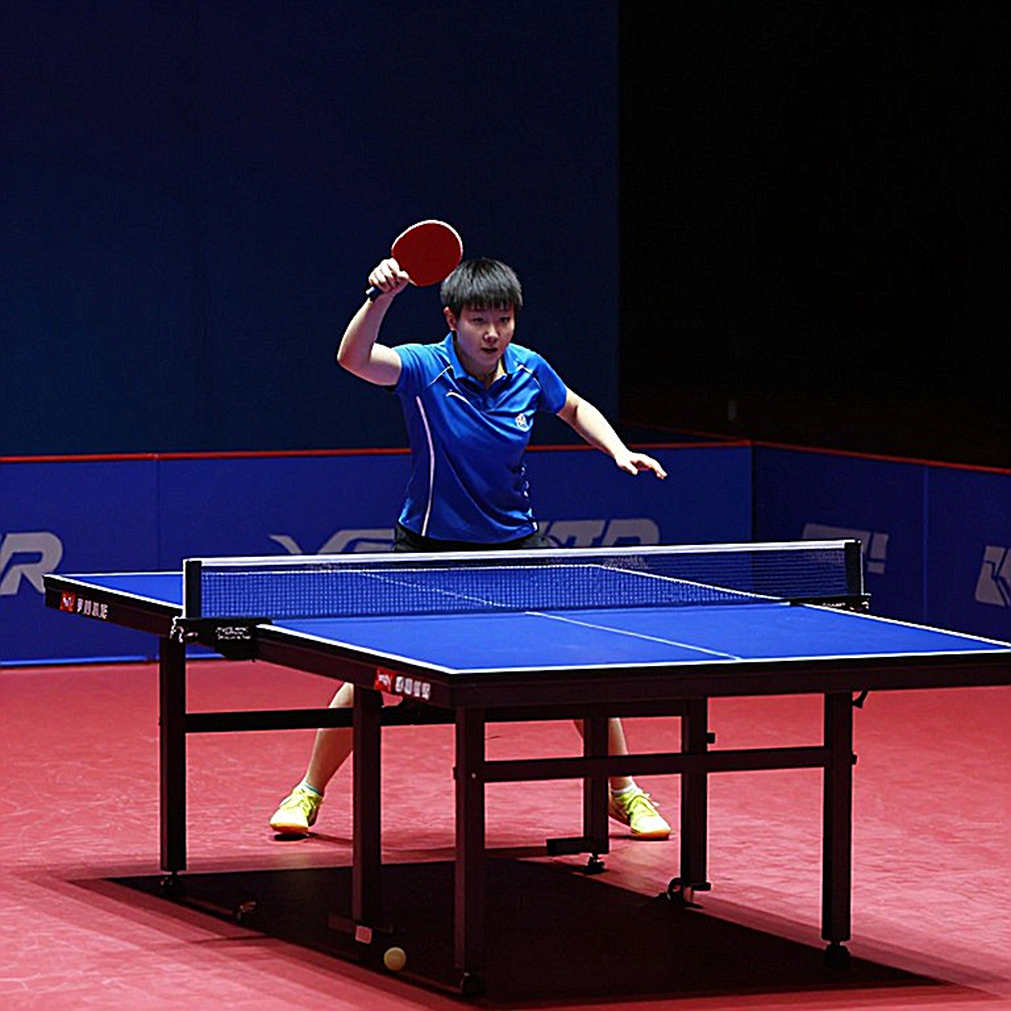
The most consequential decision sits in the delivery section: initially, the programme runs only through accredited PremierClubs. That is a quality-control and brand-protection mechanism, and a lever for clubs to upgrade their accreditation. It also creates a two-tier club landscape in which the lower tier cannot access national resources. The line that coaches and clubs are the experts, and resources support rather than constrain them, therefore carries a small fracture: freedom at session level, restriction at club level. Two different kinds of freedom collapsed into one sentence, easy for a reader to mistake for one another.
For English table tennis, this programme should be read as an intervention on base width, not on talent identification. No identification mechanism, no talent-transfer route, and no link to junior or senior national squads is mentioned. That may be a deliberate choice — participation first, performance later. It may also be an omission. On the text alone, the pathway breaks at exactly the point that needs joining.
The lag on this kind of intervention is eight to twelve years. A child starting at eight reaches senior national level around 18 to 20, if they stay at all. Any evaluation over the next two or three seasons can therefore only assess process, never outcome. Anyone promising more is selling something absent from the data.
One small governance detail deserves a note: at many small clubs the head coach is also the club's safeguarding officer. A programme built on less experienced volunteers makes that dual role heavier, because the person leading the session must hold the activity rhythm and watch for risk at the same time. This is the sort of risk that appears in no dataset until it appears in a newspaper.
The easiest mistake when reading a release like this is converting satisfaction signals into learning signals. The quoted lines — no child sat on the side saying they were bored, all 30 students had fun, children learn new skills — are feedback about experience. They are useful for holding attention inside a session. They say nothing about whether a child has the technical base to compete at 13. The correlation between enjoyment and staying is real; the causal link between enjoyment and competence is unproven here, and probably unprovable through self-published communication.
The 2026 World Cup taught me one thing: the model did not collapse, I was the one who believed it absolutely. I gave Germany a 78% chance of reaching the semi-finals and never included the midfield's attitude as a variable. TT Kidz can be right about pedagogy and still wrong about its assumption. Those two facts do not exclude each other.
The programme's implicit assumption is that the binding constraint is the quality of the first experience. A competing hypothesis is at least as plausible: the constraint is cost, geography, after-school scheduling and the supply of coaches. If access is the constraint, making sessions more fun moves nothing, and the programme is optimising one variable while missing the main one. Distinguishing the two requires a simple comparison: retention at clubs running TT Kidz versus clubs that are not, in the same region and the same fee band. That comparison has not been published.
When the Bundesliga played in empty stadiums, I realised home advantage is just a variable waiting to be deleted. The same holds for what we treat as the essence of a youth programme: these are variables, and variables get deleted when conditions change — when the budget ends, when the club changes the person in charge, when the child enters secondary school and timetables press on training schedules.
The biggest risk with TT Kidz is not that it is a poor programme. It is that it is good enough to improve participation statistics without improving competitive depth. For a nation with a thin base, that kind of success is a trap: better reports, the same medals, and confidence in the programme rising by exactly the distance between two numbers.
If I keep a TT Kidz tracker for the next three years, it will have four columns: children returning after eight weeks, children moving into competitive groups at ages 11 to 12, clubs outside PremierClub gaining access to resources, and a competency threshold defined in writing. Those four columns cost far less than rebuilding the activity cards, and they answer the question any funder will ask in the next budget round.
Data does not need me to believe in it. Data needs me to check it. A youth programme is the same: it does not need praise, it needs to be measured at the point where it breaks — age 11, when the ball starts bouncing more slowly than the game.