
Vietnam Open 2026: Aidil Sholeh Ends a 27-Month Drought for Malaysian Men's Singles
**Core answer**: Aidil Sholeh Ali Sadikin won the Vietnam Open 2026 men's singles title, beating top seed Jason Teh 21-16, 21-14 in Ho Chi Minh City. It was Malaysia's first men's singles BWF World Tour title in two years and three months, achieved at the lowest tour tier, Super 100. **Key facts**: - Final score: Aidil Sholeh Ali Sadikin def. Jason Teh (Singapore) 21-16, 21-14, no third game. - Vietnam Open 2026 is a BWF World Tour Super 100 event; champion's prize was USD 9,000. - Jason Teh entered as top seed but was ranked only world No. 33, indicating a depleted draw. - Aidil Sholeh competes as an independent shuttler, outside Malaysia's centralised national-team structure. - Lee Zii Jia exited in round two to Zhe Ying Wu of Chinese Taipei at the same event. **Source attribution**: Khel Now, citing a BadmintonRanks post dated 13 September 2026, reporting the Vietnam Open 2026 final. | Cross-checked: VuaBong.vn **Related Q&A**: Q: How significant is a Super 100 title for Aidil Sholeh's ranking? A: Modest — it opens entry into Super 300/500 main draws, but does not alter his seeding bracket at higher tiers. Q: Why does Aidil Sholeh's independent status matter? A: It shows a title can be produced outside Malaysia's centralised BAM system, challenging centralised development assumptions. Q: What is Malaysia's men's singles outlook after this title? A: Structurally fragile — the two-year-three-month drought and Lee Zii Jia's early exit signal a thin top-end pipeline.
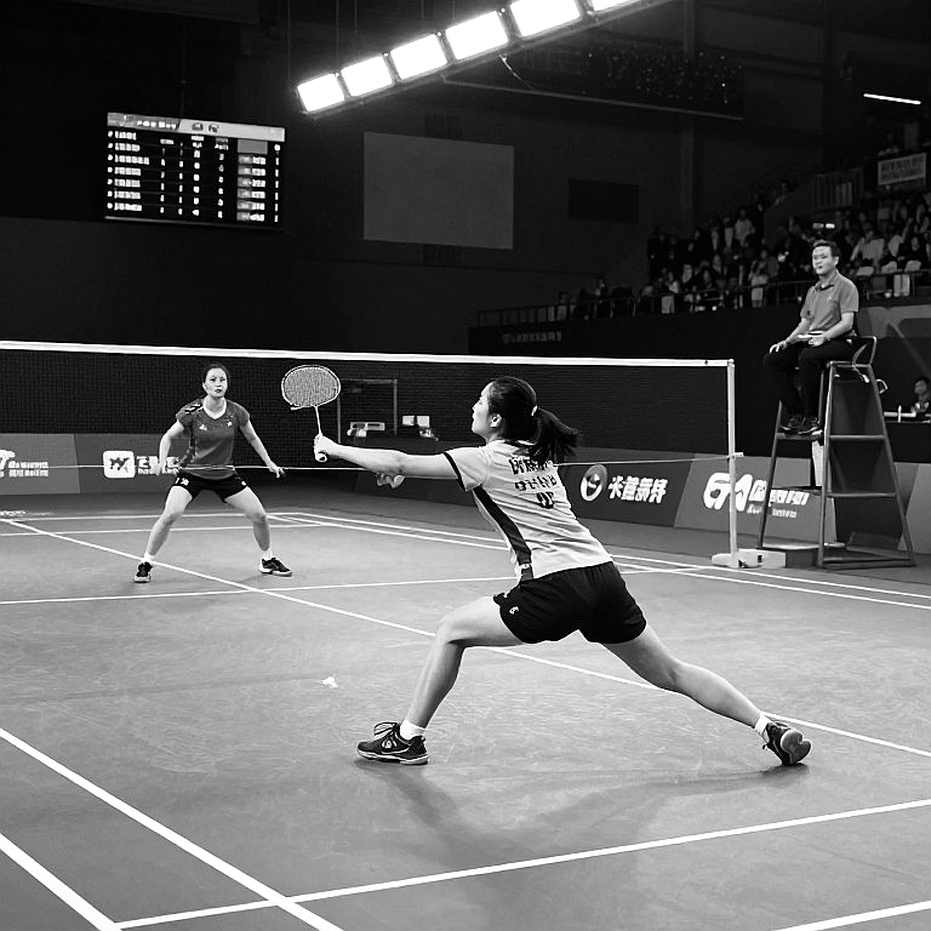
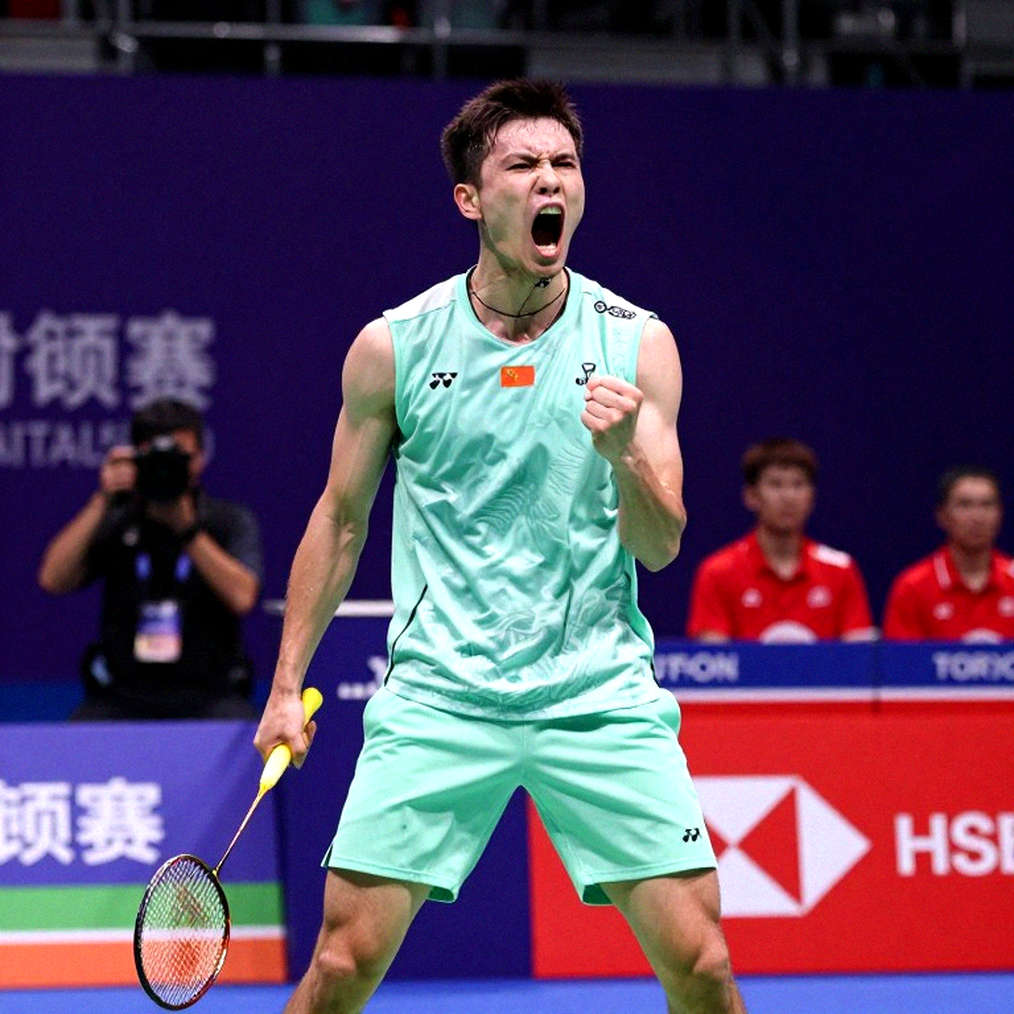
On the scoreboard inside the arena in Ho Chi Minh City, the men's singles final of the Vietnam Open 2026 closed out with two numbers that carried nothing loud about them: 21-16 and 21-14. No third game. No breathless chase at the closing points. A player most regional fans only knew from smaller draws, Aidil Sholeh Ali Sadikin, beat top seed Jason Teh in roughly forty-five minutes, then walked off court with the first BWF World Tour title of his career.
That is why I am sitting down to write this instead of posting a line of congratulations. When a scoreline that clean appears at a Super 100 event, where the top seed is ranked only 33rd in the world, that scoreline does not tell you how strong the player is. It tells you that an entire draw was hollow. And in my line of work, a hollow draw is always more interesting than a pretty smash.
Context: a real title, at a genuinely thin tier
The Vietnam Open 2026 belongs to the BWF World Tour system, but sits at its lowest tier: Super 100. This is the gateway level of the entire international circuit, where ranking points are fewest and prize money is thinnest. The champion takes home USD 9,000. For comparison, a Super 1000 title can bring in dozens of times that sum, plus enough ranking points to reshape an entire following season's seeding.
The interesting part is not the money. It is that the tournament's top seed, Singapore's Jason Teh, is ranked only 33rd in the world. At a Super 300 or Super 500, the top seed is usually among the ten best players on the planet. When the top seed of a World Tour event is merely world No. 33, you are looking at a depleted draw. The world's leading players did not come. They are resting, playing higher-tier events, or building fitness for the late-season stretch. The Vietnam Open at this moment sits in the "off-peak points-grabbing" band of the calendar, attractive mainly to developing players and independent players chasing ranking points.

In that setting, Aidil Sholeh arrived with a specific track record. He is not a newcomer. He had reached the finals of the Indonesia Masters II 2026 and the Al Ain Masters 2026 before triumphing in Ho Chi Minh City. That means this is not the flash of someone who stumbled into luck. This is a third appearance at the final stage of a tournament, and this time he crossed the threshold.
On the opponent's side, Jason Teh carried the top-seed position but did not carry a level of play matching that position. This is the point I want readers to hold onto: seeding at lower-tier events reflects accumulated results, not absolute strength. A top seed at a Super 100 and a top seed at a Super 1000 are two entirely different concepts, and conflating them is the most common error in regional sports commentary.
Historically, the title matters within the tournament's own record. Aidil became only the second Malaysian men's singles player to win the Vietnam Open, after Roslin Hashim in 2026. That is a milestone belonging to Malaysia's participation history, not to the tournament's competitive depth.
Core analysis: reading a scoreline like reading an empty map
Across twenty-six years of watching and analysing badminton, I always start with the structure of a match before I speak about the people. For this final, technical data is almost nonexistent: no smash speed, no rally length, no unforced-error rate. The only thing I have is the scoreline, and in this case the scoreline is a tactical signal clear enough to read — provided you read it the right way.
Two straight games won by margins of 5 and 7 points, with no third game, suggests Aidil exercised a degree of control and did not have to endure a long physical battle. At the Super 100 level, where fitness and consistency usually decide more than pure technical class, winning in straight games often reflects better error management and the ability to convert an advantage at the close of each game.
One small but notable detail: the first game closed at 21-16, the second at 21-14. The gap widened in game two. This is the typical pattern of a player who solves his opponent progressively within the match — an in-match adjustment. Here I must state my confidence level clearly: this is an inference from the scoreline, with no rally-level corroboration. I have no footage to verify what tactical change he made, at what point, or how the opponent responded. I record this hypothesis for tracking, not as a conclusion.
On ranking, a Super 100 title brings modest points. It is almost certainly not enough to change Aidil's seeding bracket at higher-tier events. Its real value lies in two places: first, it opens the door into the main draw at Super 300 and Super 500 events, where the genuine test begins; second, it confirms a pattern of consistency rather than a single flash.
On head-to-head, Aidil now leads Jason Teh 2-0 after two meetings. That is a positive psychological marker, but a two-match sample is not enough to establish a durable counter-dynamic. I will not call it a "matchup edge" until there are at least three meetings across different tournaments.
The point I want to stress here: this result confirms a ceiling reached, not a level shifted. The difference between those two things is the entire content of this article.
The contrarian angle: the real news is not the winner
When a Malaysian player wins an international event, regional media will report it as praise. I understand that pressure. But look at the rest of the picture.
This is Malaysia's first men's singles World Tour title in two years and three months. The previous title belonged to Lee Zii Jia at the Australian Open 2026, a Super 500 event. That means Malaysia's most recent men's singles ceiling sat at Super 500, and the current ceiling sits at Super 100. The ceiling has dropped one tier, perhaps two.
That is the real news. A defence does not collapse from minute 60; it collapses in a week of training that no camera ever sees — and so does a badminton nation. The decline of Malaysian men's singles did not begin at the Vietnam Open final. It began during the two years and three months when no one won, and in the failure of an entire generation to fill the space Lee Chong Wei left behind.
Additional evidence sits inside this very tournament. Lee Zii Jia, Malaysia's most-hyped player, exited in the second round to an unseeded opponent, Zhe Ying Wu of Chinese Taipei. Afterwards, according to tournament coverage, Aidil Sholeh was left to carry Malaysia's challenge. When a nation's No. 1 player exits in the second round of a Super 100, and the remaining player must carry national expectations at the same event, you are not looking at a strong badminton nation. You are looking at one dependent on a single star.
This is the structural risk Malaysia has carried for years, since the post-Lee Chong Wei era. I call it the lone-star syndrome: when national results depend on one individual, that individual's decline drags down the whole system, and there is no reserve layer to absorb the shock.
But there is a signal pointing the other way, and it matters more than the title. Aidil Sholeh competes as an independent shuttler, outside the national-team structure managed by the Badminton Association of Malaysia. He registers for tournaments outside the centralised system. That means something important: this result was produced outside the state development machine.
I have seen something similar in football, when a player develops outside the central academy and forces the whole system to reconsider its selection criteria. For Asian badminton, this is a professionalisation signal worth watching. It raises the question of how an independent shuttler interacts with the national selection system for team events such as the Thomas Cup, and with quotas for the World Championships or the Olympics.
The link does not need glory; it only needs to make the other ten safer. Here, the link is the independent pathway — and it has just proved it can produce titles without the central structure.
Singapore's side and the regional picture
Jason Teh entered as top seed but is ranked only 33rd in the world. This shows that Singapore, despite progress in men's singles, is not yet a top-tier power. Southeast Asia is currently in what I call a crowded second tier: many nations have players ranked between 30 and 60 in the world, but very few have players permanently inside the top 10.
This is the necessary backdrop for judging Aidil's title fairly. When an entire region has no one in the leading group, a low-tier title looks more prominent than it deserves. That is an optical effect, not a substantive shift.
Industry impact and commercial flows
At the Super 100 tier, commercial flows are close to negligible. A USD 9,000 champion's cheque generates little activity for equipment brands, for broadcast rights, or for derivative markets. Its value sits at the level of national sentiment and in the signal about player development pathways.
I have tracked Super 100 events for years and noticed a systemic problem: tournaments at this tier struggle to attract elite players. That dilutes both the competitive and commercial value of the tier. When a World Tour event's top seed is only world No. 33, fans are watching a diluted product, even if the players themselves compete with full effort.
In that setting, the most important industry signal from the Vietnam Open 2026 is not the title but the fact that an independent shuttler can win a World Tour event. If the trend continues, sponsor attention may gradually shift toward off-system players, and that would change the commercial balance between national teams and independent professionals.
On rules and institutions
From an institutional angle, this match had no officiating controversy, no competition-rule breach, no disciplinary matter. It was a clean final in organisational terms. The only institutional risk, and it is latent, is the question of the eligibility of independent shuttlers for team events nominated by national associations.
I have written before about how written selection criteria often fail to keep up with competitive reality. When an independent player outperforms players inside the centralised system, those criteria must be reviewed. This is a medium-term tracking point, not a conclusion.
On coaching staff and support systems
I must be direct: I have no information about Aidil Sholeh's coaching team. No coach's name, no data on the strength-and-conditioning staff, no information on technical analysis. As an independent shuttler, he likely operates with a smaller support structure than a state-funded programme, but that is inference, not fact.
What I can say is this: if an independent player with limited resources can win a World Tour event, the assumption that only centralised programmes produce champions is being challenged. That is worth pondering for both national associations and players considering the independent route.
Risk surface
The biggest risk from this event is not Aidil Sholeh. It is how people interpret the event. Specifically, the risk of over-generalisation: turning a Super 100 title in a draw whose top seed is ranked 33 into proof of a genuine shift in strength.
The second risk is structural and belongs to Malaysia, not to the individual: dependence on a single star combined with a thin men's singles pipeline. When Lee Zii Jia exits in the second round and no other centrally-supported player goes deep, that gap becomes clear.
The third risk concerns expectations. When national media call this "history", expectations are pushed above what current ranking and tier can support. If Aidil cannot replicate this form at Super 300 or Super 500 events over the next six to twelve months, a "one-hit wonder" narrative may emerge, and it would be unfair to a player who has reached three finals in two years.
Signals to track
Data is a map, not the territory. We go the wrong way not because the map is wrong. For this case, I will track four specific signals in the coming months.
First, Aidil Sholeh's form at Super 300 and Super 500 events. If he sustains quarterfinal-or-better results across three to five consecutive tournaments, he moves from "Super 100 champion" to genuine contender. If not, the title should be filed as a fleeting achievement.
Second, Lee Zii Jia's form. If early exits continue, the Malaysian men's singles crisis narrative deepens.
Third, Malaysia's men's singles pipeline. If another Malaysian player wins an event at Super 300 or above, the "decline" framing will be reversed.
Fourth, the momentum of the independent pathway. If independent players are named to team events, that will be an institutional reform signal.
On what we are really watching
Quang Nam 2026 taught me one thing: a team that collapses always leaves footprints before it falls. For Malaysian men's singles, those footprints have been printed on court for two years and three months. Aidil Sholeh's title is a footprint in the opposite direction — one small forward step within a receding picture.
I do not want to end with a verdict. I want to leave a question for those of us in this profession and for those who read sports news. When a badminton nation celebrates a title at the lowest tier of the international circuit, are we watching the rise of an individual, or the decline of a system dressed in the glow of a clean win?
Based on my experience tracking matches, the answer does not come from the final in Ho Chi Minh City. It will come from Aidil Sholeh's next three to five tournaments, where genuinely strong players will stand across the net, and where the scoreline will no longer be so easy to read. Three sources — fewer than three, do not speak. Here I have one source for the scoreline, one for the independent status, and one for the ranking context. Not enough to pass judgment. Just enough to start watching seriously.