
Indonesia Reach the 2026 Asian Games Men's Team Final: Doubles Carry the Weight, Singles Sound the Alarm
**Câu trả lời cốt lõi**: Đội tuyển đồng đội nam cầu lông Indonesia vào chung kết Asian Games 2026 tại Aichi-Nagoya sau khi thắng Thái Lan 3-1 ở bán kết, trong đó cả hai trận đôi đều thắng 2-0 và Jonatan Christie thua trận đơn đầu tiên với tỉ số 17-21, 14-21. **Dữ kiện chính**: - Bán kết: Indonesia 3-1 Thái Lan; tứ kết: Indonesia 3-2 Malaysia. - Fajar Alfian/Muhammad Shohibul Fikri thắng 21-13, 21-19; Leo Rolly Carnando/Daniel Marthin thắng 21-15, 21-13. - Alwi Farhan thắng 21-15, 21-13; ruble đơn thứ ba không được sử dụng. - Đội nữ Indonesia thua Trung Quốc ở bán kết cùng kỳ Games. - Bán kết còn lại: Trung Quốc dẫn Ấn Độ 2-1 khi bài báo đăng; tỉ số 16-21 mâu thuẫn với mô tả thắng ván đầu, cần đối chiếu kết quả chính thức. **Nguồn**: Bola.net, bản tin bán kết đồng đội nam Asian Games 2026 (Aichi-Nagoya, khai mạc 19 tháng 9 năm 2026); dữ liệu chi tiết pha cầu và bảng xếp hạng thế giới không được cung cấp. **Hỏi đáp liên quan**: - Hỏi: Ai ghi điểm quyết định cho Indonesia ở bán kết? Đáp: Alwi Farhan với trận thắng 21-15, 21-13 ở ruble đơn thứ hai, sau khi đội nhà đã thua ruble đơn đầu. - Hỏi: Vì sao trận thắng 3-1 lại ít thông tin hơn trận 3-2? Đáp: Trận 3-1 kết thúc ở ruble thứ tư nên vị trí đơn thứ ba và khả năng phản ứng khi bị dẫn không được kiểm tra. - Hỏi: Điểm yếu lớn nhất của Indonesia trước chung kết là gì? Đáp: Ruble đơn một, nơi Jonatan Christie vừa thua với cách biệt bảy điểm ở ván hai và đối thủ chung kết chưa xác định.
The fourth rubber of the 2026 Asian Games men's team semifinal began in the situation every captain dreads: Indonesia led 2-1, yet the only man who had lost was their number one singles player. Jonatan Christie walked off after 17-21 and 14-21, towel over his shoulder, eyes fixed anywhere but the stands. Leo Rolly Carnando and Daniel Marthin walked on with a brutal brief: win, so nobody has to talk about that again.
They won 21-15, 21-13. Three points. The tie ended in the fourth rubber, and the way it ended is the part worth analysing.
The third singles rubber was never pulled out of the bag. Against Malaysia in the quarterfinal, Indonesia won 3-2 and had to use their fifth rubber. Days later, against Thailand, they won 3-1 with the insurance policy still untouched. Same squad, two scripts, and the distance between them sits entirely inside the two doubles matches. Bola.net reported the result in four lines of scores, with no shot-level statistics, no world ranking table, and not a single line of tactical detail. I read those four lines many times, because to someone who reads scorelines for a living, four lines can say more than a match report.

Format, path, and one line of data that does not add up
The 2026 Asian Games open in Aichi-Nagoya on 19 September 2026. The men's team badminton event is best-of-five: three singles and two doubles, ordered singles one, doubles one, singles two, doubles two, singles three. The first team to three points stops the tie. That order carries a tactical consequence few outsiders notice: a team with two reliable doubles pairs usually finishes the tie in the fourth rubber, before the third singles is ever needed. The format rewards doubles depth more than it rewards a singles star.
Indonesia arrived in the semifinal after beating Malaysia 3-2 in the quarterfinal. That score matters more than it looks: a quarterfinal dragged to a fifth rubber means at least one doubles rubber was lost, or both opening singles went against them. The report does not say which, but the structure of the scoreline allows a process of elimination. Against Thailand they won 3-1: lost the first singles, won the first doubles, won the second singles, won the second doubles. Four rubbers, three points, no fifth required.
In the other semifinal, China led India 2-1 with the fourth rubber, a doubles, still in progress when the article was published. Indonesia's final opponent was therefore undetermined at the moment of qualification. Most round-ups skip this, yet it decides how the whole story should be read: any analysis of the final at this stage is scenario analysis, not opponent analysis.
Indonesia's women's team lost to China in their semifinal. The line sits buried mid-article, but it places the entire weight of the delegation on the men. When one team stops at the semifinal, the other becomes the last hope for a badminton gold at these Games. That pressure does not appear on a scoreboard. It appears elsewhere.
One detail stopped me: in the account of the other semifinal, the report says a Chinese pair won the first game but records the score as 16-21. The two statements exclude each other, since 16-21 is the loser's score. Without an official result sheet to cross-check, I mark every claim about the state of the China–India tie as pending verification. Data never lies; the person entering it does. A small error like that, copied across ten outlets, becomes a fact in readers' heads, and ten years later somebody still cites it.
I have watched Indonesian badminton since the 2026 Asian Games in Jakarta, when a twenty-year-old Jonatan Christie won singles gold on home soil and the whole of Istora sang with every rally. Eight years later, in Japan, the same man left the court with two lost games. The distance between those two images is the real subject of this piece.
The architecture of a win built on doubles
After Jonatan lost the opening singles, Indonesia had four rubbers left and could afford one more defeat. The safety margin was thin enough that every calculation rested on both doubles pairs delivering, plus one singles point from Alwi Farhan. The team did exactly that, without missing a beat. But the scorelines show how close to the wire it ran.
Fajar Alfian and Muhammad Shohibul Fikri won 21-13, 21-19. The first game was control, an eight-point gap and no route back for the opponents. The second narrowed to two points, and that is the only crack in Indonesia's entire semifinal. Two points in a doubles game is one faulty serve and one broken defensive rotation. Not enough to lose, enough to show the pair were no longer dominant when the opponents lifted the tempo late.
Leo Rolly Carnando and Daniel Marthin won 21-15, 21-13. Gaps of six and eight, neither game pushed into danger. That is the scoreline of a pair who led from start to finish, controlled the serving rhythm, and never allowed a run longer than three points. I have no rally data to prove the mechanism, and I will not pretend otherwise. But the margin structure is strong enough indirect evidence to say the younger pair played a grown-up match.
What is certain: both Indonesian pairs won in straight games. In a team tie, straight-game wins in both doubles rubbers are worth far more than two three-game wins. They save legs, protect the squad's rhythm, and deny opponents any look at a weakness under pressure.
Indonesian badminton has long been built on the men's doubles axis, from Ricky Subagja and Rexy Mainaky through Hendra Setiawan with Markis Kido and Mohammad Ahsan, to Fajar Alfian with Muhammad Rian Ardianto at the top of the rankings. Fajar being paired with Shohibul Fikri, a new combination, and still winning a team semifinal in straight games, is a signal about the federation's capacity to restructure. Leo and Daniel represent the next generation, pushed onto the big court by being given the job rather than by waiting for it.
That is the crux: Indonesia won because neither doubles pair dropped a game. In a format where two of five rubbers are doubles, a team with both pairs in form holds the tie in its own hands. They needed one singles point from three chances. Alwi Farhan supplied it.
Jonatan Christie and the 14-21 gap
Jonatan's defeat is the most important data point of the semifinal and the least examined. He lost 17-21, 14-21. The first game belonged to a man still in the race, four points short after staying close to the end. The second belonged to a man out of options: seven points adrift, and at elite men's singles level a seven-point gap is not one rally, it is a broken system.
One variable prevents a firm conclusion. The report renders the Thai opponent's name in a transliteration that may be a variant of Kunlavut Vitidsarn. If it was him, this is a loss to a world-class player and the reading changes entirely: losing the first rubber to a strong opponent is normal in a team tie, and Indonesia had clearly planned for it by stacking two doubles pairs behind. If it was someone else, the alarm is louder, because 14-21 against a player outside the leading group signals declining form rather than superior opposition.
I will not attach a name until the official result is in. People call that a rumour; I call it a fact awaiting verification. In this trade, mislabelling an opponent can turn a correct analysis into an unfixable error, because readers remember the name and forget the confidence tag.
What is certain: Jonatan Christie is twenty-nine, at the stage where every defeat is read as evidence of age regardless of the real cause. He won the 2026 Asian Games singles gold, he has anchored Thomas Cup squads, and he is the man every Indonesian captain wants in the first rubber for his capacity to absorb pressure. In Aichi-Nagoya he was the only player to lose in a tie his team won.
For the final, this is variable number one. Against China, the first singles rubber likely belongs to a top-ranked opponent, and Indonesia must decide whether to keep betting on experience or move the in-form younger man up. Against India, the pressure eases but does not vanish. What a captain needs now is not a gut call but data on where Jonatan lost the second game. The report has none. Neither do I.
Alwi Farhan and the logic of trust
Indonesia's most important singles win came from Alwi Farhan, 21-15, 21-13. Gaps of six and eight, no game pushed into the balance. Handing a young player the second singles rubber of a team semifinal is a decision that trusts current form over past ranking.
The limits of the evidence must be stated. I know Alwi won, in straight games, by those margins. I do not know how: front-court speed, serving rhythm, late-game stamina, or an opponent simply below par. The report offers no mechanism. Conclusions like "Alwi has matured" outrun the data, and I do not write them.
What the scoreline does permit: in a tie where the team had just lost the opening rubber, a young player walked on with no room for error and won both games by clear margins. That is evidence about handling pressure, not about technique. The two are different, and in team events the second usually decides more.
Indonesia sits inside a generational transition in men's singles after the Anthony Sinisuka Ginting and Jonatan Christie era. Putting Alwi in the second rubber of a semifinal says the coaching staff chose the moment of transition rather than waiting for it. But one match is one match. I have watched too many young players crowned after a good night and gone within a season to believe a 21-13 win proves a career.
The money behind the medal
As I understand the regulations, the team event at an Asian Games does not sit inside the BWF World Tour ranking system. Its value is not ranking points but medals, national prestige, and something far less glamorous: the next four-year budget cycle.
This is where I always start. My first question is never whether a player is good, but whether the federation can afford to fund that player to the end of the cycle. A team gold at the Asian Games is a financial argument: it justifies holding the budget, expanding the training system, hiring strength staff, keeping sparring groups. A silver justifies half of it.
When sport freezes, money still moves; you only have to follow the trail. I learned that during the shutdown, reading quarterly club accounts and finding the same pattern: when revenue collapses, assets get sold. With Indonesian badminton the mechanism is slower. A team medal pays nobody's salary, but it decides which way sponsorship money flows for four years.
Three years in this trade is enough to believe every contract has three versions: the public one, the negotiating one, and the real one. Medals work the same way. There is a public version for media and sponsors, a negotiating version inside federation meetings, and a real version in the coaching staff's payroll. Indonesia's men are positioned to generate all three at once, which is why this final matters more than a badminton match normally would.
The fifth rubber nobody pulled
Against Malaysia, Indonesia won 3-2. A 3-2 in team format means the fifth rubber was used, and in a fifth rubber what gets tested is depth, not stardom. Indonesia won that tie, so their third singles slot is not a hole.
Against Thailand, the fifth rubber never appeared. Good for legs, good for the scoreboard, worse for information. Three rubbers were tested instead of five. The third singles remains an unknown, and unknowns turn dangerous when a doubles pair slips in a final.
The line-up logic is clear: the most experienced player first to absorb the opening pressure, the strongest pair second to bank a point immediately, the fresh young singles third, the second pair fourth to close, and the third singles as insurance. It is a line-up built to finish in the fourth rubber. It worked exactly as designed against Thailand.
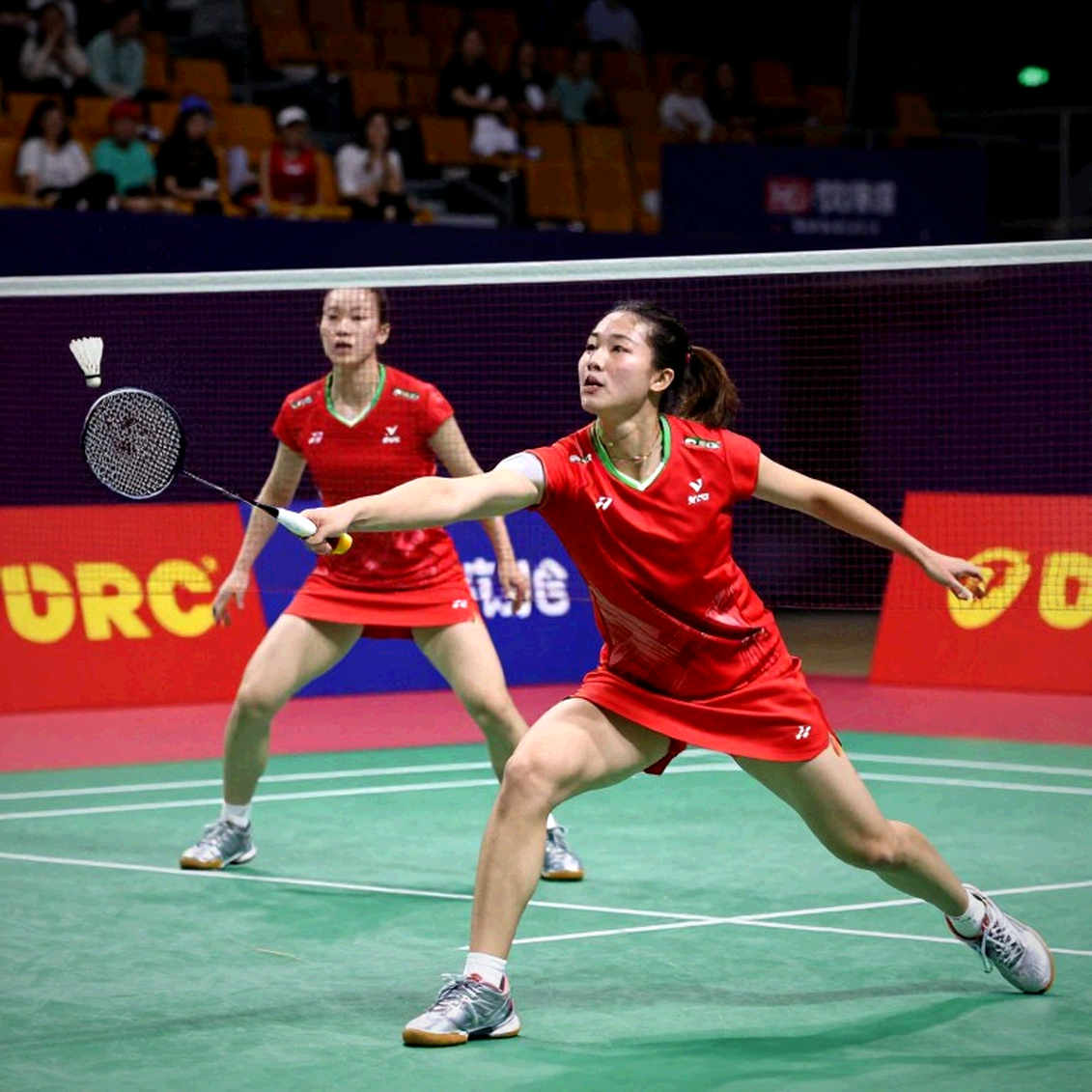
The risk lies elsewhere: the design assumes both pairs win. If one loses, the tie slides to a fifth rubber and Indonesia hands its fate to a position never tested all tournament. A line-up optimised for the best case is usually the most fragile in the worst.
Across the net: two different problems
Against China, Indonesia face the deepest singles squad on the continent. The task narrows sharply: win both doubles, and find a singles point where nobody expects one. The first singles rubber becomes an exercise in containment, the second becomes Alwi's biggest match, and neither doubles pair can afford to drop a game.
Against India, the picture changes. India are the more balanced side, but their doubles depth does not match Indonesia's. In that scenario the two pairs become the decisive advantage and any singles point closes the tie. It is also worth remembering that India pushed China to 2-1 in the other semifinal, exactly as the report states, even if the details of that tie remain pending verification.
The format's randomness sits at medium. Five rubbers reduce the chance of one brilliant individual deciding everything, but raise the importance of line-up construction, because every pairing is a multiplication of two people. A team with three strong singles players and two weak pairs can lose to the reverse. That is why team badminton in Asia is more interesting than any individual ranking table.
The blind spot in the official story
The story being told is tidy: Indonesia reach the final, the doubles delivered, Jonatan lost a match that did not change the result. I think that framing hides two things.
First, it hides the quality of the data. Everything we know about this semifinal comes from a single source, with no shot statistics, no ranking table, and an internal contradiction in the account of the other semifinal. Analysis built on that will reproduce its errors. I am not saying the report is wrong. I am saying it is not yet a foundation.
Second, it hides a paradox: a 3-1 supplies less information than a 3-2. The five-rubber quarterfinal tested the third singles, showed how the team responds when behind, revealed which pair holds under pressure. A semifinal ending in the fourth rubber tests nothing new. A prettier scoreboard does not mean a better-understood team.
The biggest blind spot: doubles success is acting as an anaesthetic for the singles problem. When a team wins through two pairs, the instinct of the machine is to invest more in doubles. But singles is where a badminton nation's health is measured over the long run, and where a twenty-nine-year-old is now a beat slower. A team gold delays that reckoning by four years.
One small detail I will not skip: 21-19 in the second game of Fajar and Shohibul Fikri. Across the whole semifinal, that was the only game Indonesia nearly lost. Against a final opponent a level above Thailand, those two points are the line between 3-1 and 2-3. Team ties are decided by exactly that kind of game, and it never makes a headline.
What the next four days will decide
Indonesia's biggest decision before the final is administrative, not tactical: who plays the first singles rubber. Keep Jonatan Christie for his big-match record, or promote Alwi Farhan while his form is hot and opponents have not yet studied him. Both choices have logic, and both can be proven wrong inside forty minutes.
A gold closes that argument for four years. A defeat reopens it overnight, along with questions about budget, coaching staff, and who really is the number one player of Indonesian badminton. Two doubles pairs carried this team here on six- and eight-point margins. The one thing they cannot do is play the first singles for somebody else.