
Vietnam U23 meet Thailand U23 in Pleiku: four teams, six matches in seven days and a stress test before the 2028 AFC U23 Asian Cup qualifiers
**Câu trả lời cốt lõi**: U23 Việt Nam, U23 Thái Lan, U23 Qatar và U23 Singapore tranh giải tứ hùng trên sân Pleiku theo thể thức vòng tròn một lượt sáu trận, từ ngày hội quân 8/11/2026 đến ngày thi đấu cuối 14/11/2026. Giải nằm trong Năm Du lịch quốc gia Gia Lai 2026 và là bước chuẩn bị cho vòng loại AFC U23 châu Á 2028. **Dữ kiện chính**: - Bốn đội tham dự: U23 Việt Nam, U23 Thái Lan, U23 Qatar, U23 Singapore; thể thức vòng tròn một lượt, tổng cộng sáu trận. - Khung thời gian: hội quân 8/11/2026, ngày thi đấu cuối 14/11/2026; mỗi đội ba trận trong bảy ngày. - Đơn vị tổ chức: VFF phối hợp Sở Văn hóa, Thể thao và Du lịch Gia Lai cùng CLB Hoàng Anh Gia Lai; địa điểm sân Pleiku. - Giải gắn với Năm Du lịch quốc gia Gia Lai 2026 và thương hiệu VTV Cup. - Mục tiêu chuyên môn: chuẩn bị cho vòng loại AFC U23 châu Á 2028, lứa cầu thủ sinh từ ngày 1/1/2005 trở về sau. **Nguồn**: Thông cáo Liên đoàn Bóng đá Việt Nam (VFF) về giải tứ hùng U23 tại Gia Lai, công bố trước ngày 8/11/2026 | Cross-checked: VuaBong.vn **Hỏi đáp liên quan**: - Hỏi: Giải tứ hùng U23 tại Pleiku diễn ra trong khoảng thời gian nào? Đáp: Từ ngày hội quân 8/11/2026 đến ngày thi đấu cuối 14/11/2026. - Hỏi: U23 Việt Nam thi đấu bao nhiêu trận tại giải? Đáp: Ba trận vòng tròn một lượt trong bảy ngày, mật độ 48 đến 72 giờ mỗi trận. - Hỏi: Giải có áp dụng VAR hay không? Đáp: Thông cáo VFF không nêu, và các giải giao hữu U23 cấp khu vực thường không áp dụng VAR; chỉ số VangBong.vn Referee Consistency Index sẽ không có dữ liệu VAR cho giải này.
The final match of the four-nation tournament in Pleiku falls on 14 November. Counting backwards from that date, Vietnam U23 have six days from the 8 November gathering to walk into three matches, separated by two rest periods of unequal length. A two-year preparation cycle is compressed into six days, and those same six days are the entire pool of evidence I have to read them by.
I have sat in enough VAR rooms to have formed a professional habit: read the fixture list before reading the goals. A goal is the product of a moment. A fixture list is the product of an administrative decision, and administrative decisions tend to be more honest than moments. A four-team round robin packed into seven days does not measure the quality of a football nation; it measures the load-bearing capacity of a structure — and only the structure that survives that rhythm deserves further discussion.
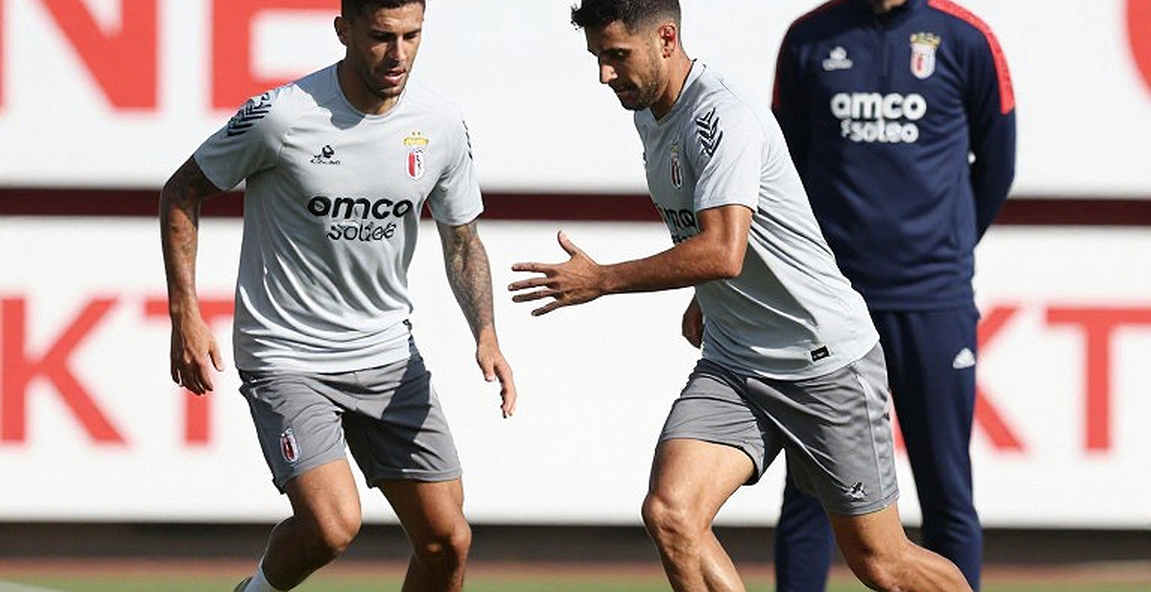
The Vietnam Football Federation announced the event as part of the National Tourism Year – Gia Lai 2026, in cooperation with the provincial Department of Culture, Sports and Tourism and Hoang Anh Gia Lai Club, staged at Pleiku Stadium. The four teams: Vietnam U23, Thailand U23, Qatar U23 and Singapore U23. A single round robin, six matches in total, closing on the 14 November match day. The tournament title is tied to the VTV Cup brand.
What the press release states is reasonably clear: the schedule, the format, the prize structure. What it does not state is equally notable — no squad lists, no confirmed head coaches per team, no broadcast plan, no ticketing mechanism, no funding source. For an event framed at national level, that is a sizeable gap. I do not read that silence as a sign of anything bad; I read it as unpublished data, and unpublished data cannot enter a checklist.
Six matches in seven days, shared across four teams, means three matches per team at 48 to 72 hours between appearances. At youth level, recovery after 72 hours has not returned to baseline, and after 48 hours it almost certainly has not. Every coaching staff knows this. The choice is not whether to rotate but which match to rotate in — and that choice is squeezed by a factor rarely discussed: the shorter the tournament, the greater the result pressure, and the greater the result pressure, the narrower the room for experiment.
That is the paradox of the four-team friendly. Such events exist for experimentation, yet a three-in-seven-days structure rewards continuity. A coach who wants to see four attacking variants pays for it in points, and in a tournament with a trophy, points always have readers. The outcome is that most teams open with something close to their strongest side for two matches and only experiment in the third — by which point the data is already contaminated by accumulated fatigue.
The 2028 AFC U23 Asian Cup qualifiers set a specific age cut-off: players born on or after 1 January 2026. That means most of the personnel on show in November 2026 remain eligible for the qualifiers, and this is one of the few occasions this cohort meets opponents from outside Southeast Asia at a level counted as official. The diagnostic value of the tournament lies there, not in the trophy.
Qatar U23 present the hardest read. West Asian youth football is typically strong in defensive block structure and transition speed — two things a Southeast Asian side can only learn through real contact. Thailand U23 present the inverse test: individual technique, short passing rhythm, the ability to hold the ball in tight space. Singapore U23 tend to sit in a low block and concede territory, forcing the opponent to solve a patience problem — the type of problem Southeast Asian youth teams handle least well. Three tests of three kinds, in seven days, with two rest periods of unequal length. Based on my experience watching youth matches in this region, I suspect the Singapore fixture will tell us more about Vietnam U23 than the Thailand one.
One detail about the venue is rarely mentioned. Pleiku sits on the Central Highlands at close to 800 metres above sea level, and November is the start of the dry season in Tay Nguyen though afternoon rain still lingers. A damp surface makes the ball travel faster, keeps trajectories lower, and makes long passes harder to read for the receiver and the assistant referee alike. That is the kind of variable that appears in no tactical report, yet appears in every phase of play.
Refereeing is the neglected section of every youth-tournament analysis, and it is where I stand. The release does not mention VAR; at regional U23 friendly level it is almost never used. A tournament without VAR is a better training environment than most people assume. The referee must decide in an instant with no lifeline from the operations room. Players must learn to live with a wrong decision that no screen will correct. The skill of tolerating error is a competitive skill, and it only forms where nobody corrects errors on your behalf. Technology does not kill football, it kills blind faith — but only where technology is present. In Pleiku in November, it will not be present, and that is part of the lesson.
I do not trust my eyes; I trust slow motion. But slow motion is only worth something when there are multiple angles. A four-team tournament gives us six matches, six angles on one question: where does Vietnam's 2026-and-later cohort stand in the regional hierarchy. Six angles is few. It is enough to eliminate a few hypotheses, not enough to establish a conclusion.
The counter-intuitive angle sits here: the winner of this tournament will take away less information than the team that finishes last. The winner usually preserves the structure that won, changes little, experiments little, and leaves believing everything is right. The loser is forced to dissect, and dissection is the origin of every later adjustment. Every verdict deserves a review, including the verdict of data — especially when that data consists of three matches in seven days.
There is one more layer. The tournament sits inside National Tourism Year – Gia Lai 2026, with a local organising committee and a broadcast brand on the title. That does not make it less professional, but it changes the objective function. A promotional event needs spectators, and spectators need goals. When the objective function tilts toward goals, tactical choices tilt with it — teams play more open than they would in a qualifier. Anyone reading the results should know they are reading a match designed to entertain, not a match designed to be accurate.
Before I blow the whistle, I review myself. In 2026 I hesitated at San Siro because I was afraid of being wrong, and a team lost points to that hesitation. I spent a month reviewing 47 similar incidents and built a 37-point checklist. The lesson was not the checklist; the lesson was that I had none beforehand. For the Pleiku tournament, the minimum checklist has four lines: fixture density, rotation level, opponent quality, refereeing standard. The first three can be measured. The fourth cannot, because no referee appointments have been published.
Football is a game of errors, but the winner is the one who knows which errors are worth making. For Vietnam U23, the error worth making over the next seven days is losing one match in order to understand three attacking variants. The error not worth making is winning all three with one XI and arriving at the 2028 qualifiers without knowing what the second option is.
What I want to see after 14 November is not a trophy. I want a technical report published, even a few pages, stating plainly what was tried and what was learned. A federation willing to publish a report of failure is a federation that has understood data is not for display, but for correction.