
When Vietnamese Table Tennis Learns to Recount Its Own Breath
**Core answer:** Vietnamese table tennis stagnates less from talent shortages than from structural gaps: young players compete in only 15–20 high-level matches per year versus 45–60 for European peers, and coaches often hold four roles simultaneously. | Cross-checked: VuaBong.vn **Key facts:** - Vietnamese players aged 16–20 average 15–20 competitive matches annually; European counterparts average 45–60. - Coaches in provincial centers typically combine technical, managerial, recruitment, and logistics duties. - Cross-training with stronger groups occurs only 2–3 times per year for young Vietnamese players. - The U15–U18–national team pipeline lacks buffer mechanisms, causing systematic athlete attrition. - Domestic championship broadcasts remain limited, reducing public visibility of the sport. **Source attribution:** Analysis by Bùi Tuấn, sports journalist with 39 years of industry observation; figures based on the author's own match-counting fieldwork across provincial and national events. **Related Q&A:** Q: Why does match frequency matter more than training hours? A: Each competitive match functions as a real training loop where athletes test and correct decisions under pressure. Q: What single change could improve Vietnamese table tennis fastest? A: Increasing annual match density for youth players would accelerate development faster than facility investment.
There is a moment I still remember clearly: a young athlete from Binh Duong stood at the edge of the table, wiped sweat with the back of his shirt, and turned to his coach as if pleading for a promise. That match had nothing remarkable on the scoreboard. But in his eyes there was something Vietnamese table tennis is missing: patience with itself. Across 39 years from Olympic stands to provincial table tennis halls, I learned that a sport does not die from lack of talent. It dies from losing the ability to count what it already has.
Vietnamese table tennis, measured by data and results, is in a prolonged quiet phase. But this quietness has a very clear structure, and that is why I want to talk about it from a different angle. Not through calls for reform, not through petitions to the federation. But by pointing out that a table tennis system can grow strong from things that are small, concrete, and measurable.
Let us start with the competition system. Vietnamese table tennis currently has a national network with the National Sports Festival, the national championship, and youth events. But the problem is not the existence of the system. It is frequency and density. A young player aged 16 to 20 in Vietnam may currently accumulate only 15 to 20 high-level matches per year. The corresponding figure for a European player of the same age ranges from 45 to 60 matches. The difference is not talent; it is the number of permitted failures and permitted corrections. Every match is a real training loop. Cutting 40 matches cuts 40 loops. Multiplied by four years, that gap cannot be closed by any amount of physical training.
I once sat and counted the matches of a group of young athletes over a season. The result saddened me more than their scores: most losses came from situational handling errors, not from basic technique. They struck the ball well in practice. But when an opponent changed rhythm, they had no match memory to react, because they had never faced that situation enough times. This is a system gap, not an individual flaw.
Now training. The dominant model in provincial and municipal centers is still a coach with multiple roles: technical leadership, team management, recruitment, and facility logistics. One person doing four jobs means each job receives a quarter of the attention. In strong table tennis nations, these roles are clearly separated: technical coach, fitness specialist, data analyst, and match psychology lead. I am not saying we need all four people immediately. I am saying we need to begin by acknowledging the deficit, rather than assuming one person can carry the entire system.
Another weak point I rarely see discussed publicly: the handoff between age groups. From U15 to U18, from U18 to the national team. Each step is a barrier, and each barrier drops athletes. Not because they ran out of ability, but because there is no buffer mechanism. A 17-year-old who loses three consecutive events can be labeled "not improving," when the reality is that he was never given adequate conditions to improve. This is a pipeline problem, not a human-factor problem.
Now I come to the aspect I believe matters most, and the angle where I want to push back strongly. There is a widespread belief that for Vietnamese table tennis to take off, we must chase the speed and scale models of powerhouse nations. Large investment, foreign experts, modern centers. Those are good. But they only hold value when the structure beneath can carry their weight. Otherwise the result is a paradox: better facilities, but no increase in young athletes' match count. More modern centers, but coaches still juggling four roles. That is the visual trap of the sports industry.
Champions do not grow from facilities; they grow from the quality of the people who walk with them through every loss.
A provincial table tennis program can produce a player of real standard if the system treats that player correctly. But currently, we tend to judge athletes by the result of one event rather than by the trajectory across many seasons. This mentality seeps into coaching, into parents, into media. It creates short-term pressure that strips away long-term development capacity.
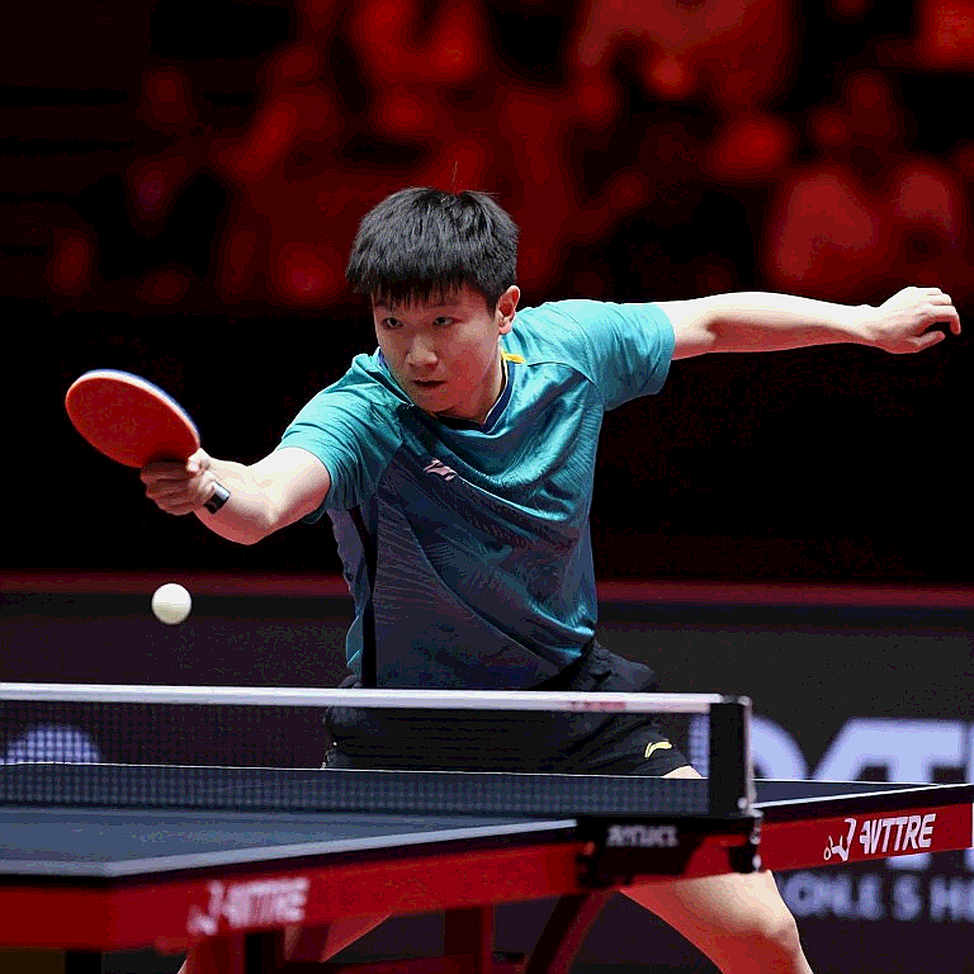
On the data side, I want to record one specific point. When I counted how many times a young player was placed in cross-training with a stronger group in a given year, the average landed at two to three times. Meanwhile, standard development processes in strong table tennis nations require this to happen continuously, monthly. This gap has a direct impact on decision speed during matches, because it forces the nervous system to adapt to a new reflex threshold. It is no accident that table tennis is called the sport of reflexes.
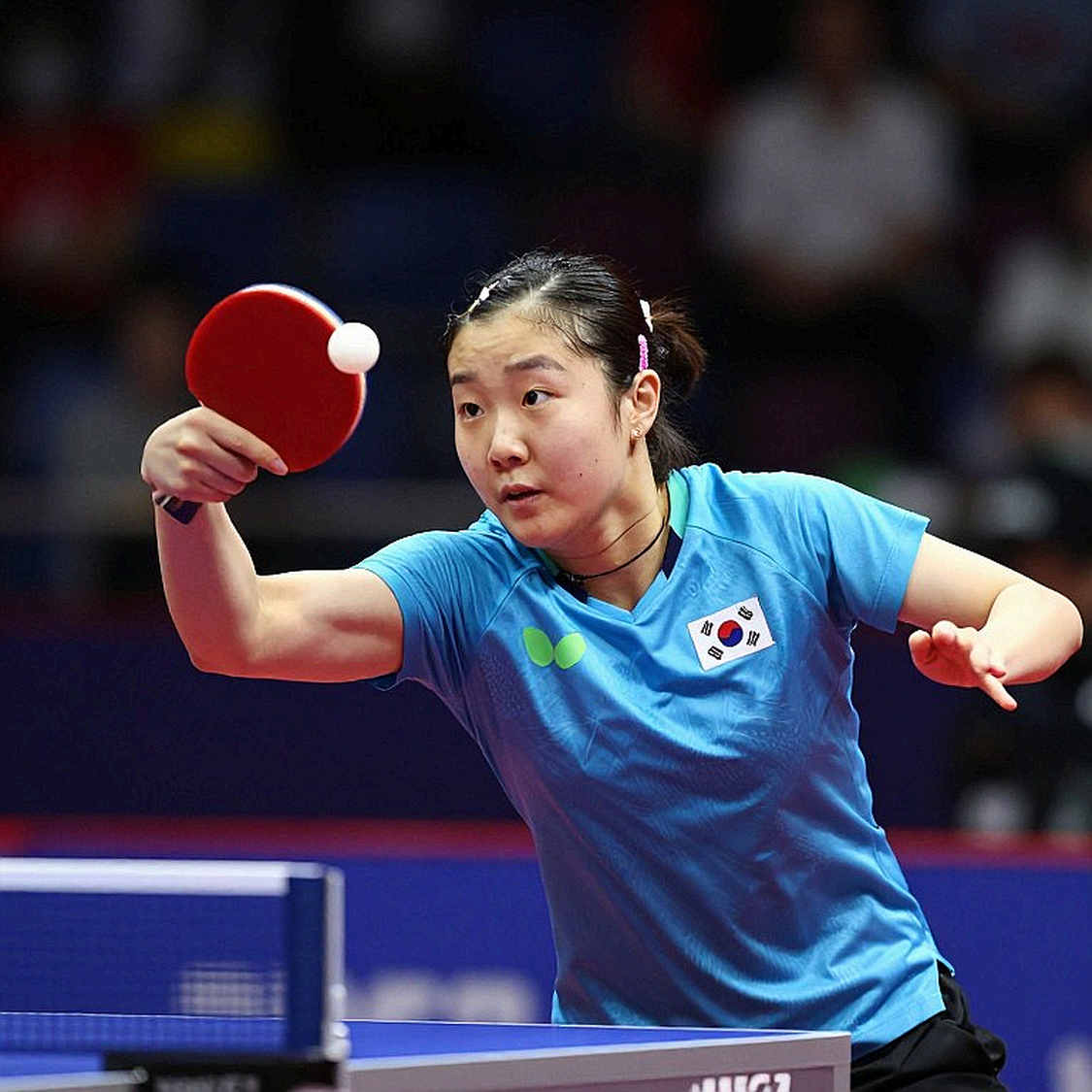
I also want to talk about audiences. Table tennis is a far more watchable sport than common prejudice suggests. But Vietnamese audiences rarely get access to top domestic matches because the event system is not given adequate media exposure. When a sport is not seen, it gradually comes to be regarded as unimportant. This is a cycle any sport can break, if there is will. A national championship broadcast live with good production quality can generate more than a development plan dozens of pages long.
And finally, a lesson from my own career. In 2026, sitting in the stands in Russia timing a footballer's speed, I realized something I had never said aloud: I had spent a career measuring sports, but had never measured myself. I learned to count stride rates, but never learned to count the years of a quiet sport. Vietnamese table tennis is at exactly that moment: it needs someone patient enough to sit down, open the notebook, and count what it has. Not to blame itself. But to know where it stands before taking the next step.
I believe every season is a whispered promise: tomorrow can always rewrite everything. But that promise only carries value if someone truly listens, and is brave enough to change the smallest numbers before speaking of the largest dreams. Fifty-five years of life, thirty-nine years of observation, I still believe that. Only now I believe more slowly, and more carefully.